- This topic is empty.
-
AuthorPosts
-
30/10/2026 at 17:57 #82668
Vacuum technology plays an essential role in modern industrial production, advanced engineering, and scientific research. It is widely used in fields such as semiconductor manufacturing, aerospace engineering, nuclear technology, and laboratory testing. In these industries, maintaining the correct vacuum conditions is crucial for ensuring process accuracy, equipment stability, and consistent product quality.
However, establishing an effective vacuum environment involves much more than purchasing a suitable vacuum pump. A complete solution may include vacuum generation systems, pressure measurement instruments, gas analysis equipment, helium leak detectors, vacuum valves, connection components, vacuum chambers, and automated control systems. These components must be properly selected and coordinated to meet specific operational requirements.
As an experienced vacuum equipment manufacturer, Sanya Hangfeng Technology Co., Ltd. offers integrated solutions supported by engineering expertise, standardized production processes, customized equipment development, and substantial manufacturing capacity. Its approach focuses on providing complete and dependable vacuum systems for demanding industrial and research applications.
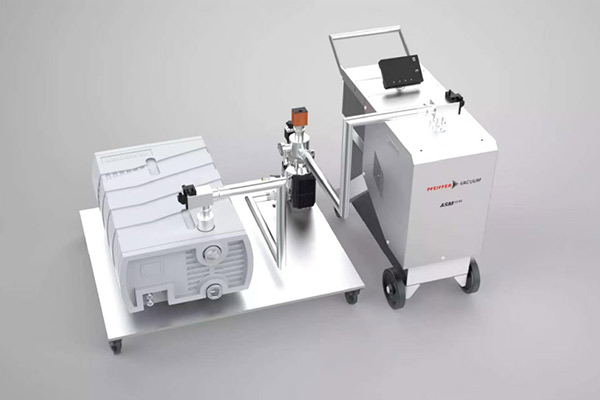
Understanding the Importance of Vacuum Performance in Advanced Industries
Vacuum requirements can vary considerably depending on the industry, production process, and intended application.
In semiconductor production, maintaining a clean and stable vacuum environment helps minimize contamination and supports precise manufacturing operations. Aerospace engineers use vacuum chambers and environmental simulation equipment to recreate extreme conditions and assess the reliability of components under specialized testing environments.
The nuclear sector places particular emphasis on sealing integrity, operational consistency, and equipment durability. Meanwhile, scientific laboratories often depend on specialized vacuum chambers, analytical instruments, and high-precision measurement technologies to conduct experiments and obtain reliable results.
For these applications, reaching a specified vacuum pressure is not necessarily enough. The overall performance of the system must also be evaluated through several important parameters, including:
-
Vacuum pumping capacity and ultimate pressure
-
Chamber dimensions, capacity, and structural design
-
Gas release and outgassing characteristics
-
System leakage rate
-
Pressure measurement precision and repeatability
-
Internal cleanliness and material compatibility
-
Temperature and environmental conditions
-
Sealing performance and material selection
-
Automation, monitoring, and control functions
-
Maintenance requirements and operational lifespan
These considerations demonstrate why vacuum equipment should be selected according to the actual application and working environment instead of relying on individual product specifications alone.
Vacuum Generation Systems: Establishing the Required Operating Environment
Vacuum generation is the starting point of any vacuum application. Its primary function is to remove gas from an enclosed space until the required low-pressure environment is achieved.
Different applications may require different pump technologies or combinations of pumping equipment. For relatively straightforward vacuum applications, evacuation speed and target pressure may be the main selection criteria. More advanced processes, however, require engineers to evaluate gas characteristics, pressure variation, pumping performance, operating cycles, and system capacity.
Sanya Hangfeng Technology develops vacuum acquisition solutions according to customers' specific process conditions. Before recommending an equipment configuration, its engineering team can assess factors such as chamber capacity, required vacuum level, evacuation time, gas load, and operating environment.
This application-oriented method helps ensure that individual components operate effectively as part of a complete system. It is particularly important for non-standard equipment and customized vacuum projects, where the coordination between pumps, chambers, valves, and control units directly influences overall performance.
Precision Vacuum Measurement for Better Process Control
Creating a vacuum environment is only one part of the process. Accurate pressure monitoring is equally necessary to understand system conditions and maintain stable operation.
Vacuum measurement instruments allow operators and engineers to monitor pressure changes throughout evacuation, production, testing, and system recovery. Because different pressure ranges require different measurement principles, selecting an appropriate gauge is essential for obtaining dependable readings.
Common industrial and laboratory applications of vacuum measurement include:
-
Tracking pressure during chamber evacuation
-
Checking whether the required vacuum level has been achieved
-
Monitoring and regulating production processes
-
Recording pressure variations over time
-
Identifying abnormal operating conditions
-
Providing feedback for automated control systems
-
Evaluating vacuum equipment performance
In precision manufacturing and scientific research, measurement consistency and long-term stability are particularly important. An instrument that provides a wide measurement range but lacks sufficient accuracy or repeatability may not satisfy actual process requirements.
Sanya Hangfeng Technology supplies vacuum measurement, testing, and analysis equipment for different application scenarios. Its technical specialists help customers identify suitable measurement technologies based on the required pressure range, equipment configuration, and process conditions. This ensures that measurement devices are properly integrated into the overall vacuum system.
Vacuum Analysis Technology for Understanding Gas Composition
A vacuum system may reach its target pressure without necessarily providing the required environmental quality. Residual gases, material outgassing, contamination, and evaporation can still influence the conditions inside the chamber.
In these circumstances, pressure readings alone cannot provide a complete picture of what is happening within the vacuum environment.
Vacuum analysis equipment offers additional insight by identifying and evaluating gas composition. This capability is valuable in semiconductor-related processes, advanced materials research, aerospace testing, laboratory experiments, and other applications where residual gas characteristics can affect results.
Sanya Hangfeng Technology provides vacuum analysis solutions and mass spectrometry systems for customers with specialized analytical requirements. Depending on project needs, these functions can be incorporated into customized vacuum equipment, allowing customers to obtain a more integrated solution instead of coordinating multiple independent suppliers.
Combining analytical instruments with the vacuum system can also improve equipment compatibility and simplify installation, commissioning, daily operation, and subsequent maintenance.
Helium Leak Detection for Improved Vacuum System Integrity
Leak prevention and detection are essential to maintaining vacuum performance over time.
Even a small leakage point can introduce unwanted gas into a vacuum chamber, making it difficult to maintain the required pressure. Although conventional pressure-rise and pressure-decay testing methods can identify certain leakage problems, they may not offer sufficient sensitivity for applications with demanding sealing requirements.
Helium leak detection provides a more sensitive testing approach. In this method, helium is used as a tracer gas to locate leakage paths in components such as chambers, pipelines, valves, welded joints, sealing structures, and assembled equipment.
Typical applications include:
-
Industrial and research vacuum chambers
-
Semiconductor manufacturing machinery
-
Aerospace equipment and components
-
Heat exchangers and thermal systems
-
Refrigeration and cooling components
-
Vacuum pipelines, valves, and connectors
-
Hermetically sealed products
-
Specialized industrial assemblies
For manufacturers, an effective leak detection solution should do more than identify leakage. It should also fit into the production workflow and support consistent inspection results.
Sanya Hangfeng Technology manufactures helium leak detection instruments and automated helium leak testing systems. For production lines requiring higher inspection efficiency, customized automation functions can be incorporated to coordinate testing procedures, result evaluation, data recording, and related operations.
Such solutions are especially useful for manufacturers that need standardized, repeatable inspection processes and higher testing throughput.
Standard Vacuum Products and Tailor-Made System Integration
Different customers have different equipment requirements, and not every application needs a fully customized vacuum installation.
Sanya Hangfeng Technology offers a comprehensive selection of standard vacuum products, covering vacuum acquisition equipment, vacuum measurement and analysis instruments, helium leak detection devices, vacuum connection and isolation components, and standard or customized vacuum chambers.
Individual products can be used as independent equipment or combined to form a larger vacuum installation according to specific operating requirements.
Nevertheless, certain industrial and research projects involve technical conditions that standard products cannot fully satisfy. These may include non-standard chamber dimensions, specialized internal configurations, automatic inspection procedures, environmental simulation functions, or connections with existing manufacturing systems.
To address these challenges, Sanya Hangfeng Technology provides customized production and integrated engineering services. Its project capabilities include:
-
Complete vacuum equipment and integrated systems
-
Environmental simulation equipment
-
Mass spectrometry and vacuum analysis systems
-
Automated helium leak detection installations
-
Customized vacuum chambers
-
Non-standard vacuum equipment integration projects
Through these services, the company aims to deliver complete operational solutions rather than simply supplying separate equipment components.
Key Factors Behind Reliable Vacuum Equipment
The reliability of a vacuum system depends on the combined performance of its design, components, manufacturing quality, and testing procedures.
For example, chamber structures must be engineered to withstand the intended operating conditions. Sealing surfaces need appropriate machining accuracy, while vacuum components must be compatible with the required pressure range and process environment. Pumping capacity should correspond to the actual gas load, and measurement instruments must maintain dependable readings throughout operation.
The manufacturing and commissioning stages are equally important.
Sanya Hangfeng Technology has a core technical team with more than ten years of experience in the vacuum industry. Supported by standardized production lines and large-scale intelligent manufacturing facilities, the company can manage customized projects through a coordinated process covering engineering development, equipment manufacturing, assembly, inspection, and delivery.
Its quality management practices extend throughout the production cycle rather than concentrating exclusively on final product inspection. This approach helps control potential issues associated with inconsistent manufacturing, component assembly, and insufficient equipment testing.
By combining engineering knowledge with structured manufacturing procedures, the company works to provide vacuum equipment that meets the practical requirements of different industrial environments.
Vacuum Solutions for Aerospace, Nuclear Technology, Semiconductors, and Research
Vacuum equipment is an important part of many technologies that demand high levels of precision and operational reliability.
In aerospace engineering, vacuum chambers and environmental simulation systems help researchers evaluate component performance under specialized conditions. Semiconductor manufacturing depends on controlled vacuum environments for numerous production processes. Nuclear-related projects may require equipment with dependable sealing characteristics and stable long-term operation.
Scientific research institutions also rely on specialized vacuum chambers and analytical instruments to conduct experiments involving unique materials, gases, and environmental conditions.
Sanya Hangfeng Technology has provided vacuum equipment and integrated solutions for customers in advanced industrial sectors and scientific research fields.
The company's experience serving Southeast Asian and Middle Eastern markets has also helped it develop capabilities in international project communication, manufacturing coordination, export operations, and overseas delivery.
For international buyers, these capabilities are particularly relevant when purchasing customized equipment or arranging a complete engineering project that involves multiple technical requirements.
How to Evaluate a Professional Vacuum Equipment Supplier
Selecting an appropriate supplier is an important step in ensuring the long-term performance of a vacuum project. Buyers should evaluate more than product catalogs, technical parameters, and initial purchasing costs.
A qualified supplier should ideally demonstrate the ability to:
-
Understand the customer's application and operating conditions.
-
Recommend appropriate vacuum generation technologies.
-
Supply accurate and dependable vacuum measurement equipment.
-
Provide suitable helium leak detection solutions.
-
Manufacture standard and customized vacuum chambers.
-
Integrate different vacuum technologies into complete systems.
-
Support equipment testing, installation, and commissioning.
-
Coordinate international production, export, and delivery requirements.
-
Provide ongoing technical assistance when necessary.
Working with a manufacturer that combines equipment production and vacuum engineering capabilities can reduce coordination difficulties and make complex projects easier to manage.
Sanya Hangfeng Technology: An Integrated Partner for Vacuum Engineering
Sanya Hangfeng Technology Co., Ltd. specializes in the high-end vacuum industry, bringing together research and development, manufacturing, sales, import and export operations, and technical services.
Its product range includes vacuum acquisition systems, vacuum measurement and analytical equipment, helium leak detection instruments, vacuum connection and isolation components, and standard as well as customized vacuum chambers.
For projects with more demanding technical requirements, the company also offers complete vacuum equipment, environmental simulation systems, mass spectrometry analysis solutions, automated helium leak detection equipment, and customized non-standard vacuum system integration.
With an experienced engineering team, standardized manufacturing processes, precision production capabilities, and substantial delivery capacity, Sanya Hangfeng Technology can support customers seeking both conventional vacuum products and specialized integrated equipment.
For businesses and research organizations in aerospace, nuclear technology, semiconductor manufacturing, and other advanced sectors, choosing a vacuum equipment supplier is ultimately about more than purchasing machinery. What matters is whether the supplier can understand the application, develop an appropriate technical solution, maintain manufacturing consistency, verify equipment performance, and deliver a system that operates reliably under real working conditions.
By combining application-based engineering, customized equipment development, manufacturing quality control, and integrated technical services, Sanya Hangfeng Technology continues to provide practical vacuum solutions for industrial and scientific customers in China and international markets.
http://www.aeropextech.com
Sanya Hangfeng Technology Co., Ltd. -
-
AuthorPosts

- You must be logged in to reply to this topic.