- This topic is empty.
-
AuthorPosts
-
15/12/2025 at 11:37 #80713
Erasers may seem like simple stationery items, but the material behind them plays a critical role in performance, safety, durability, and user experience. Among the most common options on today’s market are TPR erasers and PVC erasers. While both are widely used in schools, offices, and art studios, they differ significantly in composition, erasing behavior, environmental impact, and suitability for different users.
If you are a buyer, distributor, OEM brand, or simply someone who wants to choose the best eraser for a specific application, understanding the key differences between TPR erasers and PVC erasers is essential. This in-depth guide breaks down everything you need to know—from materials and performance to safety standards and long-term value—so you can make an informed decision.
What Are TPR Erasers?
TPR stands for Thermoplastic Rubber. It is a class of elastomeric materials that combine the elasticity of rubber with the processing advantages of thermoplastics. TPR can be melted, reshaped, and recycled like plastic, while still maintaining a soft, rubber-like feel at room temperature.
Key characteristics of TPR erasers:
-
Soft and elastic texture
-
Low abrasion on paper
-
Minimal eraser residue
-
Low odor and customizable formulations
-
Can be produced without harmful plasticizers
TPR erasers are increasingly popular in mid-range to premium stationery markets, particularly where safety, comfort, and clean erasing are priorities.
What Are PVC Erasers?
PVC erasers are made from polyvinyl chloride, a rigid plastic that becomes flexible through the addition of plasticizers. For decades, PVC erasers have dominated the global stationery market due to their low cost, ease of manufacturing, and strong erasing power.
Key characteristics of PVC erasers:
-
Firm texture with strong erasing force
-
Typically produce fine powder residue
-
Often contain plasticizers (sometimes phthalates)
-
Cost-effective for mass production
PVC erasers are commonly found in schools, exam settings, and bulk stationery kits, especially in price-sensitive markets.
Material Composition: TPR vs PVC
TPR Erasers
TPR erasers are made from thermoplastic elastomer blends, which may include:
-
Styrenic block copolymers (SBCs)
-
Rubber modifiers
-
Safe, non-migrating oils
-
Performance-enhancing fillers
High-quality TPR formulations are designed to balance softness, durability, and erasing efficiency without relying on hazardous additives.
PVC Erasers
PVC erasers are primarily composed of:
-
Polyvinyl chloride resin
-
Plasticizers (to soften the PVC)
-
Fillers (such as calcium carbonate)
-
Pigments and stabilizers
The flexibility and performance of PVC erasers heavily depend on the type and amount of plasticizer used. Lower-cost PVC erasers may use cheaper plasticizers, which can affect odor, safety, and long-term stability.
Key Difference:
TPR relies on elastic polymer structures, while PVC relies on plasticizers to achieve softness.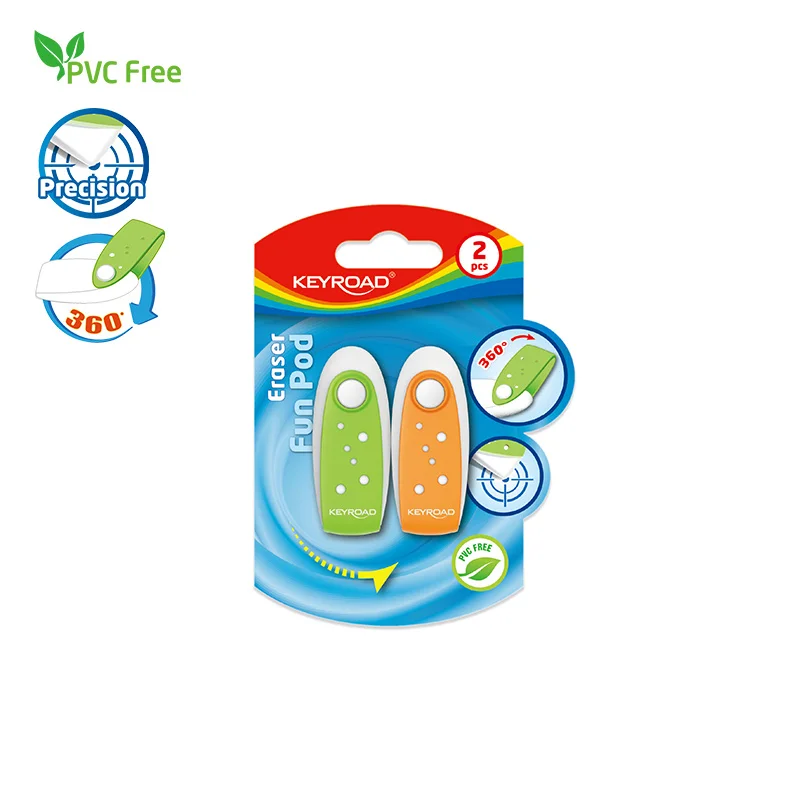
Erasing Performance Comparison
Graphite Removal
-
TPR erasers: Lift graphite gently from paper fibers, reducing the risk of tearing or surface damage. Best for HB–2B pencils.
-
PVC erasers: Remove graphite aggressively and efficiently, even for darker leads like 4B or 6B.
Smearing and Cleanliness
-
TPR erasers: Less likely to smear graphite; residue often forms small rolls that are easy to remove.
-
PVC erasers: Can smear graphite if excessive pressure is applied; residue often becomes fine dust.
Precision
-
TPR erasers: Better suited for controlled, detailed corrections.
-
PVC erasers: Suitable for fast, broad erasing in exam or classroom settings.
Key Difference:
TPR focuses on controlled, clean erasing, while PVC emphasizes strong erasing power.
Residue and Crumbling Behavior
Residue behavior is a major factor in user satisfaction.
-
TPR erasers produce soft crumbs that clump together, keeping the work surface clean.
-
PVC erasers often produce powder-like debris that spreads easily and may embed into paper texture.
For artists, designers, and office professionals, low-residue performance is often a deciding factor in favor of TPR erasers.
Paper Protection and Surface Safety
TPR Erasers
-
Gentle on thin paper
-
Less likely to tear or roughen surfaces
-
Ideal for notebooks, sketch paper, and archival documents
PVC Erasers
-
Higher friction can damage lightweight paper
-
Better suited for thick exam paper or standard copier paper
Key Difference:
TPR erasers prioritize paper safety, while PVC erasers prioritize speed and strength.
Odor and User Comfort
-
TPR erasers: Typically low-odor or odor-free, especially when made with high-quality elastomers.
-
PVC erasers: May emit a noticeable chemical smell due to plasticizers or stabilizers, particularly in low-cost versions.
For children and long-term use, odor is an important indicator of material quality.
Safety and Health Considerations
TPR Erasers
-
Can be formulated phthalate-free
-
Often compliant with EN71, ASTM F963, and REACH
-
Preferred for children’s stationery and premium brands
PVC Erasers
-
May contain regulated plasticizers if not carefully formulated
-
Compliance varies significantly by manufacturer
-
Requires strict quality control for export markets
Key Difference:
TPR offers greater flexibility in meeting modern safety and environmental regulations.
Environmental Impact and Sustainability
TPR
-
Thermoplastic and potentially recyclable
-
Lower additive migration
-
Longer usable lifespan reduces waste
PVC
-
Difficult to recycle
-
Environmental concerns during production and disposal
-
Plasticizer migration over time
While neither material is biodegradable, TPR is generally considered the more environmentally responsible option.
Durability and Aging
-
TPR erasers: Maintain elasticity over time; less prone to hardening or cracking.
-
PVC erasers: May harden, shrink, or become brittle as plasticizers migrate.
For long-term storage or bulk inventory, TPR erasers typically offer better shelf stability.
Design Flexibility and Customization
TPR Erasers
-
Easy to mold into complex shapes
-
Suitable for novelty designs, pen-style erasers, and ergonomic forms
-
Accepts vibrant colors with consistent texture
PVC Erasers
-
Limited flexibility for intricate designs
-
Commonly used in standard rectangular shapes
-
Color consistency may vary with formulation
For OEM/ODM projects, TPR provides more creative freedom.
Cost Comparison
-
PVC erasers: Lower raw material and production costs; ideal for budget markets.
-
TPR erasers: Higher material costs but better perceived value and performance.
In many cases, the slightly higher cost of TPR erasers is offset by improved quality, safety compliance, and brand positioning.
Ideal Use Scenarios
Choose TPR Erasers If:
-
You target children, artists, or premium users
-
Safety and low odor are priorities
-
Clean erasing and paper protection matter
-
You want better branding and customization options
Choose PVC Erasers If:
-
Cost control is critical
-
Products are intended for short-term or exam use
-
Strong erasing power is required
-
Market regulations are less strict
Common Myths About TPR and PVC Erasers
Myth 1: PVC erasers erase better than TPR erasers
Reality: PVC erasers erase more aggressively, but TPR erasers offer cleaner and more controlled results.Myth 2: All soft erasers are TPR
Reality: Many soft erasers are softened PVC, not true TPR.Myth 3: TPR erasers are always expensive
Reality: Mid-range TPR erasers can be cost-competitive when purchased in bulk.
How to Identify High-Quality TPR or PVC Erasers
-
Check for strong chemical odors (red flag)
-
Test residue behavior and smearing
-
Ask for MSDS/SDS and compliance certificates
-
Perform aging and flexibility tests
-
Evaluate consistency across multiple samples
Final Comparison Table (Summary)
Feature TPR Erasers PVC Erasers Material Thermoplastic Rubber Polyvinyl Chloride Softness Naturally elastic Plasticizer-dependent Residue Low, clumping crumbs Fine powder Odor Low or none Sometimes strong Paper Safety High Moderate Safety Compliance Easier Depends on formulation Custom Design Excellent Limited Cost Medium Low
Conclusion
TPR erasers and PVC erasers each have their place in the stationery market, but they serve different needs. PVC erasers remain a cost-effective solution for high-volume, short-term use, especially in exam and classroom settings. TPR erasers, on the other hand, represent a more modern, user-focused alternative—offering improved safety, cleaner erasing, better paper protection, and greater design flexibility.
As global standards for product safety and sustainability continue to rise, TPR erasers are increasingly becoming the preferred choice for brands and buyers who value quality, compliance, and long-term performance. Understanding these key differences allows you to choose the right eraser material—not just for today’s needs, but for the future of your product line or stationery collection.
http://www.johnshenstationery.com
johnshenstationery -
-
AuthorPosts

- You must be logged in to reply to this topic.