- This topic is empty.
-
AuthorPosts
-
24/09/2026 at 14:08 #82352
5-Azacytidine (Ladakamycin) is a cytidine nucleoside analog and a specific DNA methylation inhibitor. 5-Azacytidine regulates gene expression by reducing DNA methylation levels. 5-Azacytidine can induce cellular autophagy and exhibits antitumor activity.
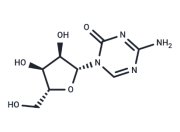
Molecular formula of 5-Azacytidine
1. Background
DNA methylation is a highly conserved and extensively studied epigenetic modification in eukaryotes. By covalently attaching a methyl group to the cytosine residue in DNA, it regulates gene expression, maintains genomic stability, determines cellular differentiation, and participates in the reprogramming of developmental processes—all without altering the DNA sequence.
In plants, DNA methylation primarily occurs at three types of sequence sites: CpG, CpHpG (where H = A/T/C), and CpHpH. These are catalyzed by DNA methyltransferases such as MET1, CMT3, and DRM2, respectively. Among these, MET1 is primarily responsible for the maintenance of CpG methylation, CMT3 participates in the stable maintenance of CpHpG methylation, while DRM2 mediates de novo methylation across the entire genome.
Extensive research has confirmed that the dynamic remodeling of DNA methylation levels is a central epigenetic regulatory event in plant somatic embryogenesis: somatic dedifferentiation, the acquisition of totipotency, and the establishment of embryogenic potential are typically accompanied by a hypomethylated state of genomic DNA, whereas embryonic development and maturation are associated with a gradual increase in methylation levels. This dynamic balance of methylation directly determines the efficiency of somatic embryogenesis induction and the developmental process.
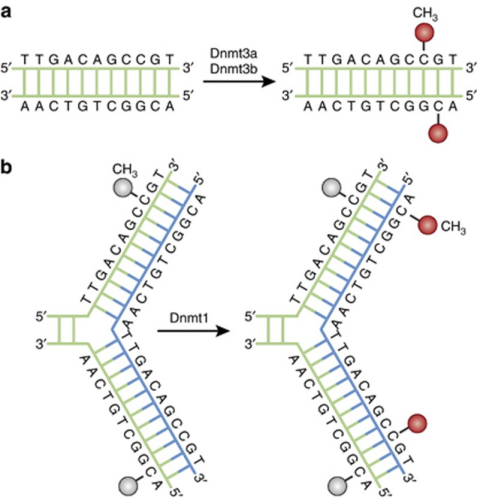
Schematic diagram of DNA methylation [1]
5-Azacytidine is a classic cytidine nucleoside analog initially discovered as an antitumor antibiotic and used in cancer treatment research. Since the 1980s, its function as a specific inhibitor of DNA methyltransferases has been progressively elucidated, establishing it as a landmark tool in the field of epigenetic research.
5-Azacytidine can be incorporated into the genome during DNA replication. Because the 5-position of its pyrimidine ring is occupied by a nitrogen atom, it cannot be methylated. It forms irreversible covalent bonds with DNA methyltransferases, leading to the degradation of the enzyme complexes, thereby broadly inhibiting the activity of MET1, CMT3, and DRM2, significantly reducing genomic methylation levels, reversing gene silencing, and activating downstream developmental programs.
As research into the mechanisms of plant somatic embryogenesis continues to deepen, 5-Azacytidine, owing to its highly efficient and specific demethylation action, has been widely applied in the optimization of plant in vitro regeneration systems. It effectively enhances the rate of embryogenic callus induction in species that are difficult to regenerate, promotes the restoration of somatic totipotency, and synchronizes somatic embryo development. It has become a key reagent for elucidating the role of DNA methylation in plant cell reprogramming and provides an important epigenetic regulatory tool for plant biotechnology and crop genetic improvement.
2. Selected Literature
2.1Article Title:DNA methyltransferase inhibition by 5-azacytidine promotes thermogenic programming in beige adipocytes

Research Overview: Using 3T3-L1-derived beige adipocytes as a model, this study demonstrates that 5-Azacytidine significantly enhances the thermogenic programming process in beige adipocytes by inhibiting DNA methyltransferases and reducing DNA methylation levels, without affecting adipocyte differentiation itself; The core mechanism involves the early upregulation of Ppargc1a, which subsequently activates thermogenic genes such as UCP1 and Cox7a1, promotes mitochondrial biogenesis and fatty acid uptake, and ultimately enhances the thermogenic function of beige adipocytes, providing new insights for epigenetic interventions in metabolic diseases such as obesity and type 2 diabetes. [2]
In this study, 3T3-L1 cells were induced to form beige adipocytes, which were treated with 5 μM 5-azacytidine for 7 days prior to differentiation. The results indicate that 5-azacytidine had no significant effect on the expression of adipogenesis-related genes such as aP2, C/ebpa, and Pparg2, nor on lipid droplet accumulation. However, it significantly upregulated both the mRNA and protein levels of UCP1, increased fatty acid uptake by approximately 20%, and simultaneously elevated mitochondrial content and the expression of Tfam and Cox7a1. Time-course analysis revealed that Ppargc1a was activated earliest, preceding UCP1 and Cox7a1, suggesting that it is a key upstream regulator of the thermogenic program promoted by 5-azacytidine in beige adipocytes.
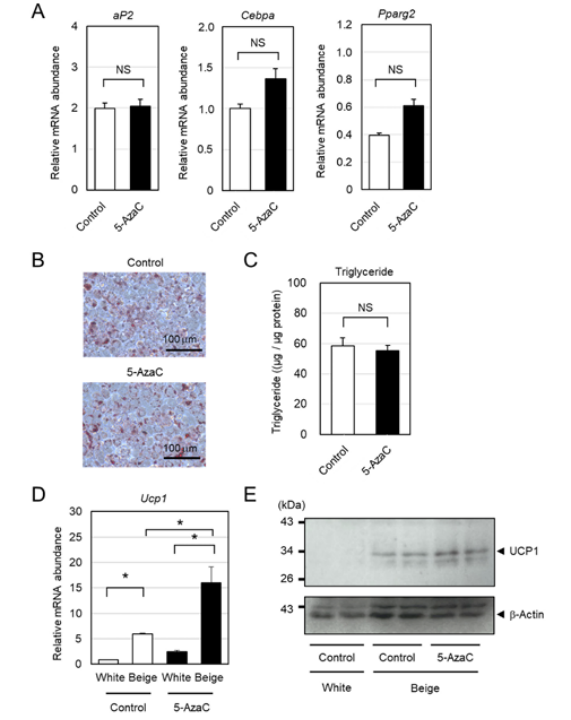
5-Azacytidine significantly upregulates UCP1 mRNA and protein levels
2.2 Article Title:5-azacytidine- and retinoic-acid-induced reprogramming ofDCCs into dormancy suppresses metastasis via restored TGF-β/SMAD4signaling
Research Overview: This study demonstrates that the combination of 5-azacytidine with all-trans retinoic acid (atRA) and the RARα agonist AM80 can induce disseminated cancer cells (DCCs) into a stable dormant state through epigenetic reprogramming, thereby inhibiting lung metastasis in head and neck squamous cell carcinoma (HNSCC); The core mechanism involves the restoration and enhancement of the TGF-β-SMAD4 signaling pathway, which acts independently of or in a complementary manner to NR2F1 and is critical for maintaining DCC dormancy and preventing metastasis. [3]
This study found that the combination of 5-azacytidine and all-trans retinoic acid (5-azacytidine +atRA) can induce disseminated cancer cells (DCCs) into a stable dormant state through epigenetic reprogramming, significantly inhibiting lung metastasis in head and neck squamous cell carcinoma. Mechanistically, 5-azacytidine +atRA does not rely on NR2F1 but instead induces dormancy by enhancing the TGF-β-SMAD4 signaling pathway, upregulating SMAD2/3/4 and p27, and promoting the nuclear translocation of SMAD4. SMAD4 knockdown completely reverses this effect, confirming its essential role. This combination regimen provides a novel epigenetic regulatory strategy for preventing tumor metastasis.
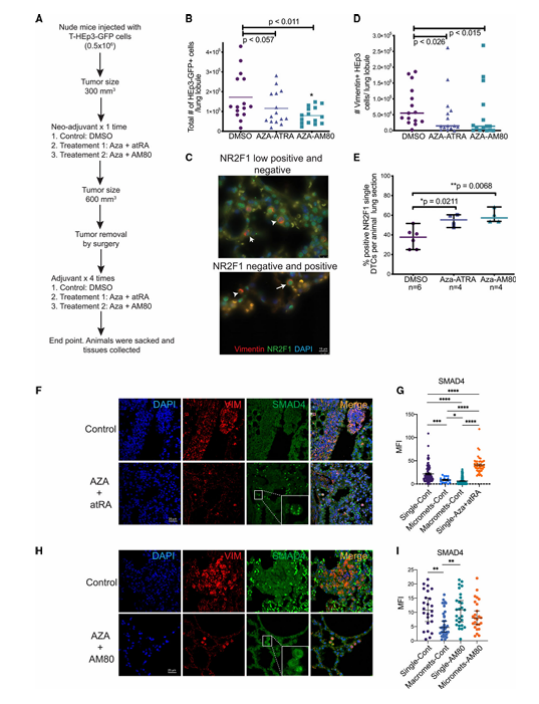
5-Azacytidine +atRA/AM80 inhibits tumor cell metastasis in vivo
2.3 Article Title:5-Azacytidine incorporated skeletal muscle-derived hydrogel promotes rat skeletal muscle regeneration

Study Overview: In this study, the DNA methyltransferase inhibitor 5-azacytidine was loaded into a decellularized rat skeletal muscle hydrogel to create an injectable regenerative system; In vitro studies confirmed that this composite hydrogel maintains the viability and proliferation of myogenic stem cells (MDSCs), while in vivo experiments demonstrated that it significantly promotes skeletal muscle regeneration and reduces scarring following quadriceps muscle resection in rats, providing a new acellular, epigenetically regulated tissue engineering strategy for the repair of volumetric muscle injuries.
This study successfully prepared a rat skeletal muscle decellularized hydrogel loaded with 5-Azacytidine. In vitro experiments confirmed that this composite system significantly maintains the viability and proliferative capacity of myogenic stem cells (MDSCs) without significant toxicity, while inducing cells to adopt a myogenic differentiation phenotype. In vivo results from rat muscle injury repair demonstrated that, compared to the control group and the pure hydrogel group, the 5-Azacytidine composite hydrogel significantly promoted the formation of new muscle fibers, improved tissue structural organization, enhanced desmin expression, effectively increased skeletal muscle regeneration efficiency, and reduced scar formation.
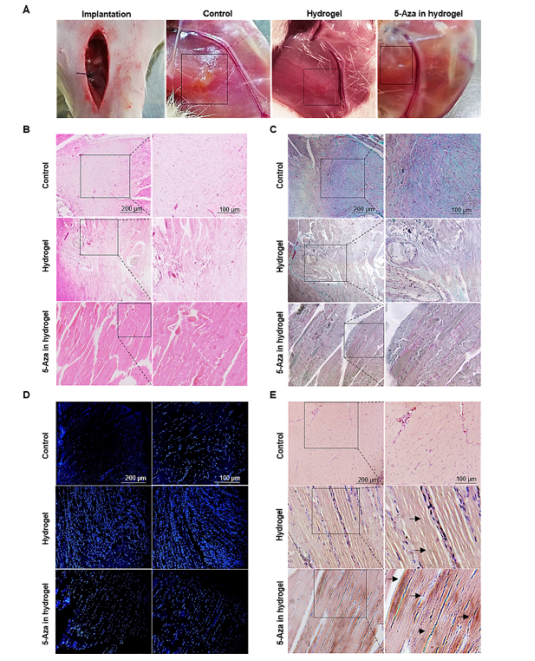 Effects of the 5-Azacytidine-Containing Hydrogel on Muscle Fiber Regeneration
 References
[1]Moore LD,Le T,Fan G.DNA methylation and its basic function.Neuropsychopharmacology.2013;38(1):23-38. doi:10.1038/npp.2012.112
[2]Kuroda M,Nomura K,Chamoto R,et al.DNA methyltransferase inhibition by5-Azacytidine promotes thermogenic programming in beige adipocytes.Biochem Biophys Res Commun.2025;774:152094. doi:10.1016/j.bbrc.2025.152094
[3]Singh DK,Carcamo S,Farias EF,et al.5-Azacytidine- and retinoic-acid-induced reprogramming of DCCs into dormancy suppresses metastasis via restored TGF-β-SMAD4signaling.Cell Rep.2023;42(6):112560. doi:10.1016/j.celrep.2023.112560
[4]Ahmadi BM,Noori A,Ashtiani MK,Rajabi S,Talkhabi M.5-Azacytidine incorporated skeletal muscle-derived hydrogel promotes rat skeletal muscle regeneration.Cells Dev.2023;173:203826.doi:10.1016/j.cdev.2023.203826
TargetMol Link: 5-Azacytidine | Ladakamycin | DNA methylation inhibitor | TargetMol
https://www.targetmol.com/compound/5-azacytidine
TargetMol Chemicals Inc. -
AuthorPosts

- You must be logged in to reply to this topic.