- This topic is empty.
-
AuthorPosts
-
29/12/2025 at 10:28 #80763
In today's industrial landscape, HDPE pipe extrusion lines play a crucial role in producing durable, cost-effective, and corrosion-resistant piping solutions for water supply, gas distribution, and industrial fluid systems. A well-designed HDPE pipe extrusion line is not just a collection of machines; it's an integrated system engineered for precision, consistency, and high output. The quality of pipes produced depends heavily on the accuracy of temperature control, screw design, material feeding, and downstream calibration. This article Xingda provides a comprehensive technical overview of what components HDPE pipe extrusion line includes and how to optimize performance.
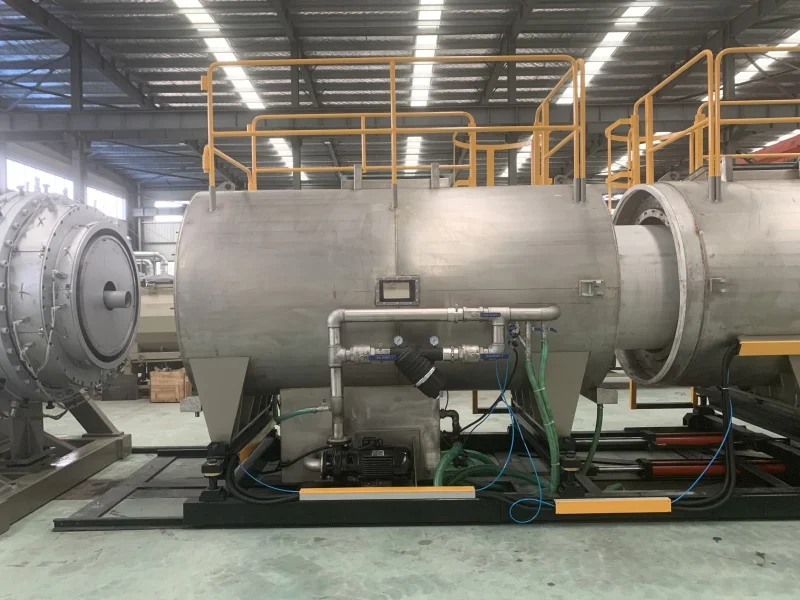
Key Components of an HDPE Pipe Extrusion Line
1. Hopper Loader and Drying System
The production begins with the automatic feeding and drying unit, which ensures that the HDPE granules entering the extruder are free from moisture. Moisture causes bubble formation and weakens the pipe's mechanical integrity.
Modern HDPE pipe extrusion lines use vacuum loaders with integrated dehumidifiers to achieve consistent drying performance. The hopper loader automatically conveys material from the storage silo to the extruder, maintaining continuous and stable feeding.
2. Extruder and Screw Design
The extruder is the heart of the HDPE pipe extrusion line. It determines output capacity, energy efficiency, and material homogeneity.
The screw geometry — particularly the compression ratio and mixing zone — must match the rheological properties of HDPE. A well-optimized screw ensures uniform melting, minimizes shear degradation, and provides stable pressure at the die head.
Key design features include:
-
High-torque gearbox for smooth power transmission
-
Bimetallic screw and barrel for wear and corrosion resistance
-
Precision temperature zones (typically 5–7 heating zones) for gradual material transition
-
PID temperature control to prevent overheating and ensure energy efficiency
Some extrusion lines also integrate gravimetric dosing systems to maintain a precise ratio between virgin and recycled material, allowing cost-effective production without compromising pipe quality.
3. Die Head and Calibration System
The pipe die head determines the pipe's diameter and wall thickness. It is typically designed with a spiral or lattice distribution channel, ensuring even melt flow and pressure distribution.
High-performance HDPE pipe extrusion lines feature a spiral-type die with melt flow uniformity better than ±3%, which is critical for large-diameter pipes.
Immediately after extrusion, the molten pipe enters the vacuum calibration tank, where its outer diameter and surface smoothness are defined. Water sprays and vacuum pressure work together to solidify the pipe and fix its geometry precisely. Stainless steel calibration sleeves, equipped with water rings, ensure perfect roundness and minimize cooling stress.
4. Cooling and Sizing Tanks
Following calibration, the pipe passes through one or more cooling tanks to complete the solidification process. Controlled cooling is essential because rapid temperature drops can induce residual stresses.
Advanced HDPE pipe extrusion lines often employ multi-stage spray cooling systems with adjustable water temperature and flow rate. These systems ensure gradual cooling and eliminate internal stress, maintaining consistent mechanical properties throughout the pipe wall.
5. Haul-Off (Caterpillar) Unit
The haul-off unit provides the pulling force that keeps the extrusion process continuous and stable. Its synchronized speed with the extruder's output rate is vital for maintaining wall thickness uniformity.
Depending on pipe diameter, the haul-off can have 2, 4, 6, or even 10 caterpillar tracks. Each track is driven by an independent servo motor for precise speed control. The surface of the tracks is usually coated with soft rubber or polyurethane to prevent surface damage to the pipe.
6. Cutting and Coiling System
Once the pipe reaches the desired length, it is cut using an automatic planetary cutter or saw-type cutter. Planetary cutters are preferred for larger diameters because they provide clean, burr-free cuts without deforming the pipe ends.
For smaller diameters, the HDPE pipe extrusion line may include a coiling unit, which neatly winds the pipe into rolls for easier transport and installation.
Optimizing Performance of an HDPE Pipe Extrusion Line
The efficiency and quality of an HDPE pipe extrusion line depend on the optimal configuration of various process parameters. Ensuring these factors are properly adjusted is essential for producing high-quality, dimensionally accurate pipes. Below are the key areas for performance optimization in an HDPE pipe extrusion line:
Temperature and Pressure Control
The stability of the extrusion process is highly dependent on precise temperature and melt pressure control. In an HDPE pipe extrusion line, each heating zone in the barrel must be finely tuned to ensure uniform material flow. Typically, the temperature starts at around 180°C at the feed zone and gradually increases to 220–230°C near the die head, where the final extrusion takes place.
Fluctuations in either temperature or pressure can cause significant issues such as uneven material flow, which leads to wall thickness variations in the pipe. To maintain consistent extrusion quality, modern HDPE pipe extrusion lines often incorporate advanced closed-loop control systems. These systems use pressure transducers, infrared sensors, and automated feedback loops to adjust temperature and pressure parameters in real-time, ensuring uniform melt flow and stable output.
By maintaining stable temperature and pressure profiles, manufacturers can produce HDPE pipes with consistent wall thickness and optimal physical properties. This control is particularly important when working with HDPE materials, which require precise thermal management to achieve the desired melt flow and mechanical strength.
Screw Speed and Output Rate
Screw speed is another critical parameter for optimizing the performance of an HDPE pipe extrusion line. The screw speed directly affects the throughput of the extrusion process and the quality of the extrudate. For standard HDPE materials, screw speeds typically range from 30 to 90 rpm, depending on the extruder size and the specific material being processed.
Running the extruder at higher screw speeds can increase output rates, which may be beneficial for high-demand production. However, this can also lead to excessive shear heating, potentially causing material degradation or incomplete melting of the polymer. To avoid such issues, it is essential to strike the right balance between screw speed and melt quality. By optimizing the screw speed, operators can ensure consistent throughput while maintaining the integrity of the material.
In addition, a well-calibrated screw speed ensures that the material is melted uniformly, which is crucial for maintaining the quality and dimensional accuracy of the HDPE pipe. Excessive or inadequate screw speed can lead to defects such as uneven wall thickness or poor mechanical properties, both of which impact the performance of the final product.
Cooling Efficiency
Cooling efficiency is directly linked to the dimensional stability of the HDPE pipe once it exits the extrusion die. Inadequate cooling can cause warping or distortion in the pipe, while excessive cooling may lead to internal stresses that can result in cracking or deformation later in the production process.
To optimize cooling efficiency in an HDPE pipe extrusion line, it is crucial to maintain uniform water flow across all nozzles, ensuring that the entire surface of the extruded pipe is evenly cooled. Regular maintenance practices, such as cleaning spray filters and calibration sleeves, are essential to prevent blockages or inconsistencies in water flow that could affect cooling.
Moreover, monitoring the water temperature and pH levels is important to avoid scaling and corrosion in the cooling system. This not only helps maintain efficient cooling performance but also extends the lifespan of the equipment. By ensuring the cooling process is consistently controlled, manufacturers can achieve HDPE pipes with minimal warping and optimal dimensional accuracy.
Haul-Off Synchronization
Haul-off synchronization plays a critical role in maintaining the dimensional accuracy of the extruded HDPE pipe. Precise coordination between the extruder output and the haul-off speed is essential to prevent variations in the pipe diameter. If the haul-off speed is not properly synchronized, it can lead to inconsistent pipe dimensions and surface defects.
Modern HDPE pipe extrusion lines often feature servo-controlled haul-offs with automatic speed tracking. These systems continuously adjust the haul-off speed to match the extruder output, ensuring a smooth and consistent extrusion process. This eliminates the need for manual adjustments, which can be time-consuming and prone to error, and improves consistency during diameter transitions.
By optimizing haul-off synchronization, manufacturers can produce HDPE pipes with consistent dimensions across varying pipe lengths and diameter transitions. This ensures that the pipes meet industry standards for both quality and performance, reducing the need for rework or quality control interventions.
A modern HDPE pipe extrusion line embodies advanced engineering, precision control, and intelligent automation — all aimed at producing pipes that meet the highest global standards. From material feeding and melting to calibration and cutting, every component must operate in perfect harmony to ensure superior pipe quality, consistent dimensions, and cost-effective production. By focusing on process optimization, energy efficiency, and real-time quality control, manufacturers can maximize both productivity and profitability. Whether producing pipes for municipal water supply, natural gas distribution, or industrial conduits, the HDPE pipe extrusion line remains the backbone of modern pipe manufacturing technology.
https://www.xingdapm.com/hdpe-pipe-extrusion-line.html
http://www.xingdapm.com
Zhangjiagang Xingda Machinery Co., Ltd. -
-
AuthorPosts

- You must be logged in to reply to this topic.