- This topic is empty.
-
AuthorPosts
-
07/07/2026 at 14:19 #81655
Introduction
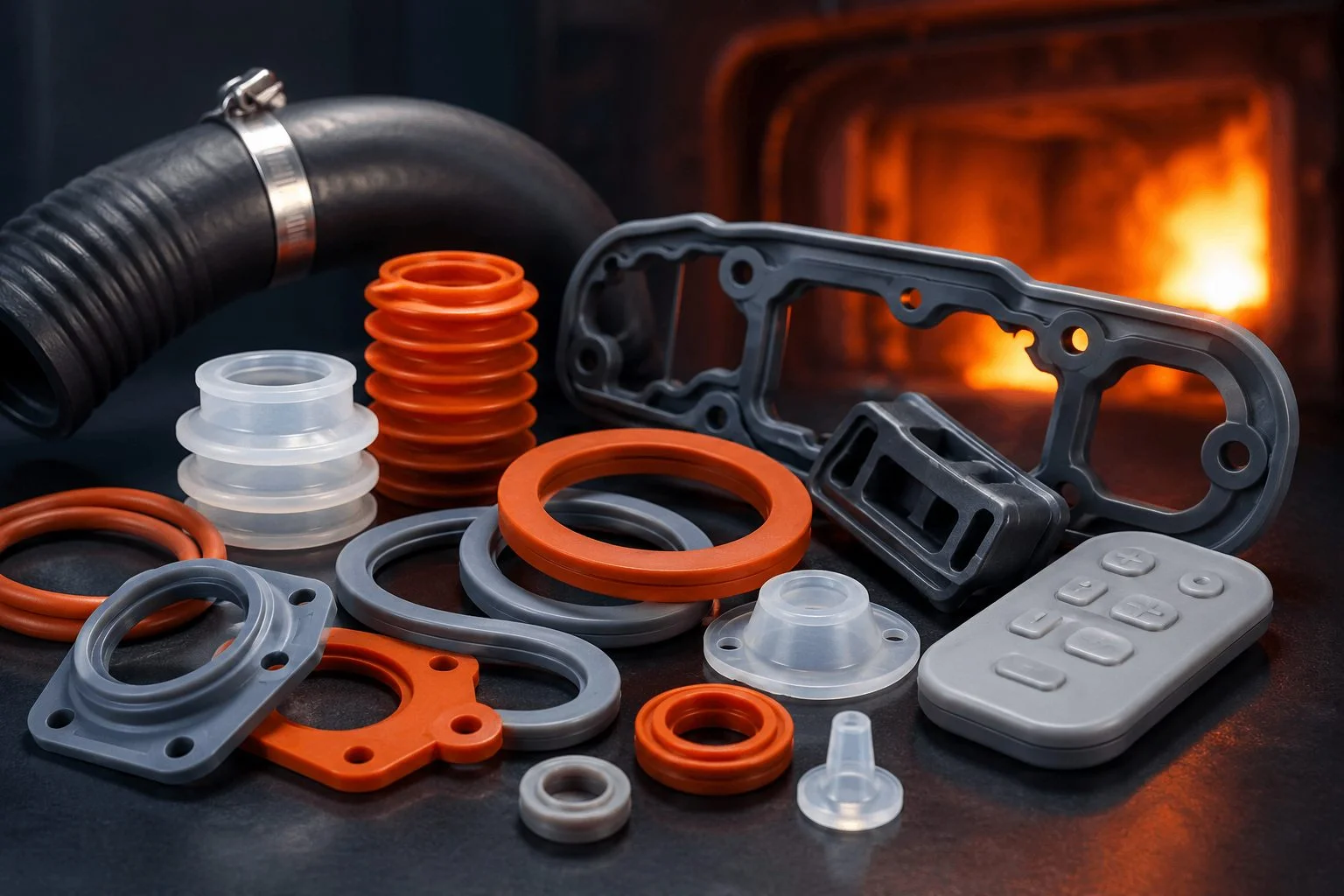
In modern manufacturing, material performance under extreme conditions has become one of the most critical factors influencing product reliability and lifespan. Among various elastomer materials, Liquid Silicone Rubber (LSR) stands out due to its exceptional thermal stability, chemical resistance, flexibility, and durability. These properties make it an ideal solution for industries requiring components that can withstand continuous or intermittent exposure to high heat.
From automotive engine compartments to industrial sealing systems and electronic insulation components, LSR is widely used in environments where traditional rubber materials would quickly degrade. This article explores how Liquid Silicone Rubber performs in high-temperature applications, why it is preferred over conventional elastomers, and how it is transforming modern product design.
What Makes Liquid Silicone Rubber Suitable for High Temperatures?
Liquid Silicone Rubber is a two-component platinum-cured elastomer that maintains stable physical properties across a wide temperature range. Typically, LSR can perform reliably from -50°C to +200°C, and in some formulations, even higher temperatures for short durations.
The key reasons for its high-temperature resistance include:
-
Siloxane backbone structure (Si–O–Si): Unlike carbon-based polymers, silicon-oxygen bonds are much more stable under heat.
-
Low thermal conductivity: Helps reduce heat transfer and material degradation.
-
Excellent oxidative stability: Resists breakdown in oxygen-rich high-temperature environments.
-
Cross-linked molecular structure: Maintains elasticity even after repeated heating cycles.
Because of these characteristics, LSR is widely selected for high-temperature silicone applications across multiple industries.
Key Advantages of Liquid Silicone Rubber in Heat-Resistant Applications
1. Exceptional Thermal Stability
LSR can maintain mechanical strength and elasticity even when exposed to continuous high heat. Unlike organic rubbers, it does not melt or deform easily, making it suitable for long-term use in engines, heaters, and industrial machinery.
2. Long Service Life
High-temperature environments typically accelerate material aging. However, LSR resists cracking, hardening, and brittleness, significantly extending product life cycles.
3. Chemical and Environmental Resistance
In addition to heat resistance, LSR is resistant to:
-
Oils and fuels
-
Oxidation
-
UV radiation
-
Moisture and steam
This makes it ideal for harsh environments such as automotive under-the-hood systems and outdoor industrial equipment.
4. Flexibility Under Extreme Conditions
Even at elevated temperatures, LSR retains its elasticity, allowing it to function effectively in sealing, damping, and insulation applications.
Manufacturing Process of High-Temperature LSR Components
The production of LSR parts typically involves injection molding, a highly automated and precise process. The steps include:
-
Material Mixing: Two liquid components are mixed in a controlled ratio.
-
Injection: The mixture is injected into a heated mold.
-
Curing: Heat triggers cross-linking, forming a solid elastomer.
-
Demolding: Finished parts are removed with minimal post-processing.
This process ensures high consistency, making it suitable for mass production of precision components used in high-heat environments.
In many industrial applications, manufacturers rely on specialized molds such as high-temp silicone mold rubber systems to ensure dimensional stability and thermal performance.
Industrial Applications of High-Temperature LSR
Automotive Industry
One of the largest application areas for LSR is the automotive sector. Components include:
-
Engine gaskets and seals
-
Turbocharger hoses
-
Ignition system insulation parts
-
Transmission system connectors
Under-the-hood environments often exceed 150°C, making LSR an ideal choice for durability and safety.
Electronics and Electrical Systems
LSR is widely used in electronic devices due to its insulation and heat resistance properties:
-
Cable insulation
-
Connector seals
-
Heat-resistant keypads
-
LED lighting components
These parts must withstand both electrical heat and environmental exposure without degrading performance.
Industrial Machinery
In industrial systems, LSR is used for:
-
High-temperature sealing rings
-
Pump components
-
Valve seals
-
Thermal insulation gaskets
Its stability ensures continuous operation in heavy-duty environments.
High-Temperature LSR in Food and Medical Applications
High-temperature resistance is not only important in industrial environments but also in hygienic applications.
Food Industry
LSR is used in baking molds, kitchen utensils, and food-processing seals because it can withstand sterilization temperatures exceeding 200°C.
Medical Industry
Medical-grade LSR is used in:
-
Sterilizable medical devices
-
Respiratory equipment components
-
Surgical tool seals
Its ability to endure repeated autoclave sterilization makes it highly valuable.
Comparison with Traditional Rubber Materials
When compared to conventional rubber such as EPDM or NBR, LSR demonstrates superior performance in high-temperature conditions.
-
Traditional rubber tends to harden or crack under heat
-
LSR maintains elasticity and structure
-
Silicone-based materials offer better long-term thermal stability
This performance gap is why industries are increasingly switching to LSR for critical applications.
Role of LSR in High-Temperature Silicone Mold Technology
Modern manufacturing depends heavily on precision molding techniques. Advanced systems such as high-temperature silicone mold rubber technology enable manufacturers to produce complex geometries with high dimensional accuracy.
Similarly, high-temperature silicone mold rubber solutions ensure stable performance during repeated production cycles, even under elevated processing temperatures.
These molding technologies allow LSR to be used in high-performance industrial and consumer products with strict quality requirements.
Challenges in High-Temperature LSR Applications
Despite its advantages, LSR is not without limitations:
1. Higher Material Cost
LSR is more expensive than conventional elastomers due to its complex production process.
2. Specialized Equipment Requirement
Injection molding of LSR requires precise temperature and mixing control systems.
3. Design Constraints
Mold design must account for shrinkage behavior and flow characteristics.
However, these challenges are often outweighed by long-term performance benefits.
Future Trends of Liquid Silicone Rubber
The demand for high-performance elastomers continues to grow. Future developments in LSR technology are expected to focus on:
-
Higher temperature resistance beyond 250°C
-
Improved mechanical strength and tear resistance
-
Eco-friendly and recyclable formulations
-
Enhanced compatibility with advanced electronics and EV systems
With the rise of electric vehicles, renewable energy systems, and smart devices, high-temperature silicone materials will play an increasingly important role in next-generation engineering.
Conclusion
Liquid Silicone Rubber has become one of the most reliable materials for high-temperature applications across automotive, electronics, medical, and industrial sectors. Its unique molecular structure provides unmatched thermal stability, flexibility, and durability compared to traditional rubber materials.
As industries continue to demand higher performance and longer-lasting components, LSR will remain a key material driving innovation in extreme-environment engineering. Whether used in sealing systems, insulation parts, or precision molded components, Liquid Silicone Rubber continues to redefine what is possible in high-temperature product design.
http://www.mosensil.com
mosensil -
-
AuthorPosts

- You must be logged in to reply to this topic.