- This topic is empty.
-
AuthorPosts
-
24/11/2026 at 17:58 #82905
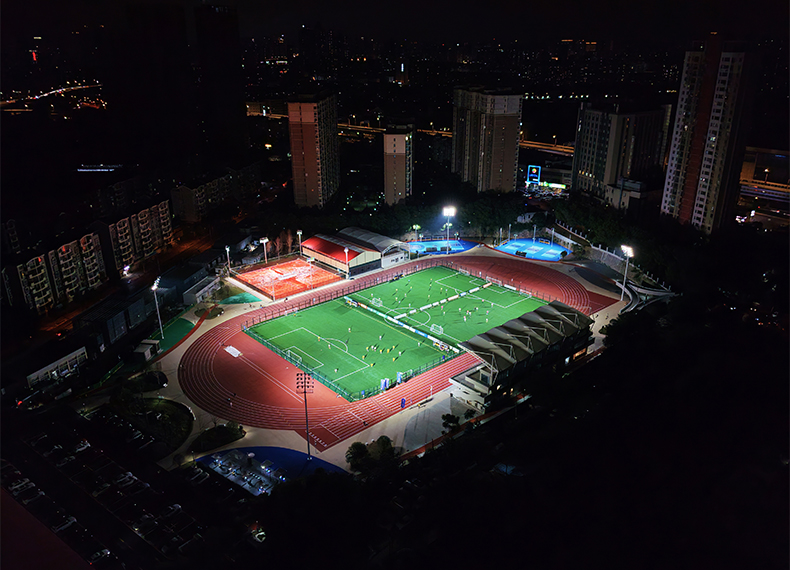
Managing sports lighting across multiple venues can become a complex task, especially when a sports campus, tournament organizer, university, or municipal authority operates several football fields, basketball courts, tennis courts, or training facilities.
Different venues may have different lighting requirements, operating schedules, competition levels, and energy consumption patterns. Without a well-planned control strategy, facility managers may need to operate each lighting system separately, increasing management workload and making it more difficult to maintain consistent operating standards.
A centralized sports lighting control system can help simplify these operations. However, successful implementation requires more than connecting luminaires to a single control platform. The lighting equipment, control architecture, communication protocols, venue requirements, and operational strategy must all be considered from the beginning.
1. Why Multi-Venue Sports Lighting Needs Centralized Management
Large sports complexes and multi-venue events often operate several facilities simultaneously.
For example, a sports campus may include:
-
A main football stadium
-
Multiple training fields
-
Indoor basketball and volleyball halls
-
Tennis courts
-
Warm-up facilities
-
Community sports grounds
Each venue may require different lighting levels and operating schedules. A main stadium hosting a televised competition may need a high-performance lighting scene, while a training field may only require a lower operating level for daily practice.
Managing these facilities independently can lead to unnecessary energy consumption, inconsistent operating procedures, and additional workload for maintenance teams.
A centralized management approach allows operators to organize lighting systems according to venue, activity, schedule, and operational requirements.
2. What Should a Centralized Sports Lighting Control System Provide?
A centralized system for multiple sports venues should ideally provide several essential functions.
Venue-based management
Operators should be able to manage different venues independently while maintaining an overview of the entire sports complex.
For example, the main stadium, training fields, and indoor sports halls may have separate operating groups, allowing authorized personnel to control the appropriate lighting systems without affecting other facilities.
Preset lighting scenes
Different activities require different lighting conditions.
Typical lighting scenes may include:
-
Training
-
Recreational activities
-
Professional competition
-
Television broadcasting
-
Cleaning and maintenance
-
Emergency operation, where supported by the system
Preset scenes can reduce repetitive manual operations and help staff select the appropriate lighting configuration for each activity.
Scheduling and automation
Lighting schedules can be organized around training sessions, match schedules, facility opening hours, and maintenance periods.
Automated schedules help reduce the risk of lights remaining unnecessarily switched on after activities have finished.
Status monitoring
Where supported by the system architecture, operators may monitor the operating status of lighting circuits or equipment, helping maintenance teams identify abnormal conditions and respond more efficiently.
The specific monitoring functions available depend on the control system, communication architecture, and compatible equipment.
3. One Platform Does Not Mean One Lighting Configuration
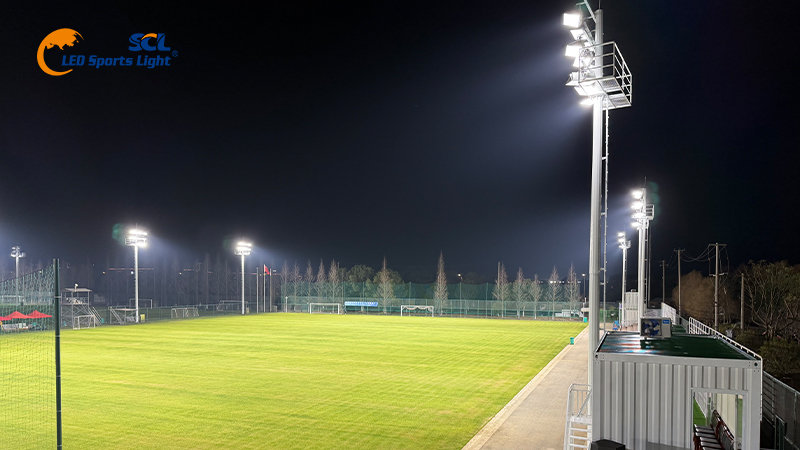
One of the most important considerations in multi-venue lighting projects is that different venues should not necessarily use identical lighting configurations.
A football stadium designed for professional competition may require different lighting performance from a university training field. Indoor basketball courts, tennis facilities, and community sports grounds may also have different requirements.
A centralized control platform should therefore support venue-specific configurations rather than force every facility into the same operating mode.
The lighting design should first establish the performance requirements of each venue. The control system should then manage these lighting configurations according to the operational needs of the facility.
This approach is particularly important for sports campuses and large events where several sports and competition levels are involved.
4. Communication Protocols and System Compatibility
For multi-venue lighting projects, communication compatibility is an important part of system planning.
Lighting control systems may use different communication protocols depending on the equipment, project requirements, and integration architecture.
Common considerations include:
-
Communication protocols supported by the luminaires and control devices
-
Compatibility between lighting control equipment and the management platform
-
Network architecture across different buildings or venues
-
Independent control and grouping requirements
-
System expansion and future maintenance
-
Integration with other venue management systems, where required
The control architecture should be defined before equipment procurement. This helps avoid compatibility problems when different venues or lighting products need to be connected to a common management system.
5. Energy Management Across Multiple Sports Venues
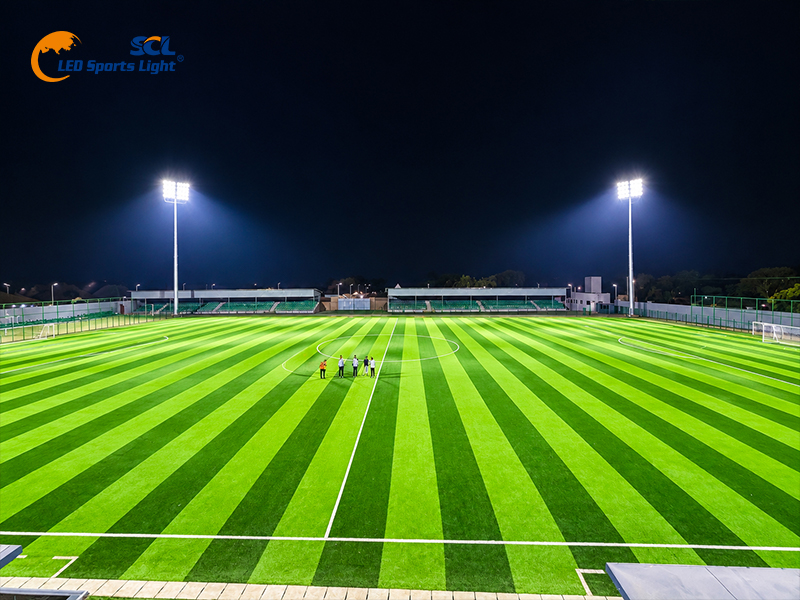
Lighting represents a significant operating expense for many sports facilities, particularly when multiple venues are used daily.
A centralized control system can support more efficient operation through scheduled switching, appropriate lighting scenes, and reduced unnecessary operation.
For example, a facility may use different lighting modes for training, competition, and maintenance. Instead of operating all lighting at full output throughout the day, the system can follow the actual requirements of each activity, where compatible equipment and approved lighting configurations support such operation.
Energy management should not be based on reducing light levels indiscriminately. The lighting must remain appropriate for the sport, activity, safety requirements, and competition conditions.
6. What Should Buyers Ask Sports Lighting Suppliers?
When evaluating suppliers for multi-venue sports lighting projects, buyers should look beyond the luminaires themselves.
Important questions include:
-
Can the supplier develop lighting solutions for different venue types within one project?
-
What lighting control systems and communication protocols are supported?
-
Can the lighting systems be grouped and managed according to individual venue requirements?
-
Are preset lighting scenes and scheduled operation available?
-
What functions are available for monitoring and maintenance?
-
Can the system be expanded when additional venues are added?
-
What technical support is provided during installation, commissioning, and operation?
These questions help distinguish a supplier offering individual lighting products from a supplier capable of supporting a more integrated sports lighting project.
7. The Role of Sports Lighting Manufacturers in Multi-Venue Projects
A sports lighting manufacturer should understand both the lighting requirements of individual venues and the operational requirements of the larger facility.
SCL Sports Lighting provides specialized sports lighting solutions for football stadiums, basketball arenas, tennis courts, training facilities, and other sports venues.
Its QDZ-ZKX intelligent control solution supports communication interfaces including Modbus RS485 and DMX output, depending on the applicable system configuration. These technologies can be considered during the planning of lighting control and integration requirements.
For multi-venue projects, however, the final centralized control architecture should be confirmed according to the number of venues, equipment compatibility, communication topology, required functions, and project-specific integration scope.
A successful project requires coordinated planning between lighting design, equipment selection, control system configuration, installation, and commissioning.
8. Plan the Control System Before the Installation Stage
Centralized sports lighting management is easier to implement when it is considered during the early stages of project planning.
Before installation, project teams should establish:
-
The number and types of sports venues involved.
-
The lighting performance requirements of each venue.
-
The operating modes and lighting scenes required.
-
The communication protocols and control architecture.
-
The venue grouping and management permissions.
-
The monitoring, maintenance, and future expansion requirements.
Early planning helps reduce the risk of incompatible equipment, unnecessary system complexity, and costly modifications after installation.
Conclusion
Managing sports lighting across multiple venues requires a coordinated approach to lighting design, control systems, equipment compatibility, and daily operations.
A centralized control system can help facility managers operate different venues more efficiently, organize lighting scenes, schedule operation, and simplify management. The system must nevertheless be designed around the actual requirements of each venue rather than using a generic configuration for every facility.
For sports campuses, tournament venues, universities, and multi-facility projects, selecting a sports lighting supplier with both lighting engineering knowledge and an understanding of intelligent control systems is an important part of long-term project success.
SCL Sports Lighting combines sports lighting manufacturing and lighting engineering experience with intelligent control solutions, supporting project teams in evaluating lighting and control requirements for different types of sports facilities.
https://www.stadiumlight.com/
GUANGDONG SEVEN CONTINENTS INDUSTRIAL CO., LTD -
-
AuthorPosts

- You must be logged in to reply to this topic.