- This topic is empty.
-
AuthorPosts
-
01/12/2025 at 13:38 #80605
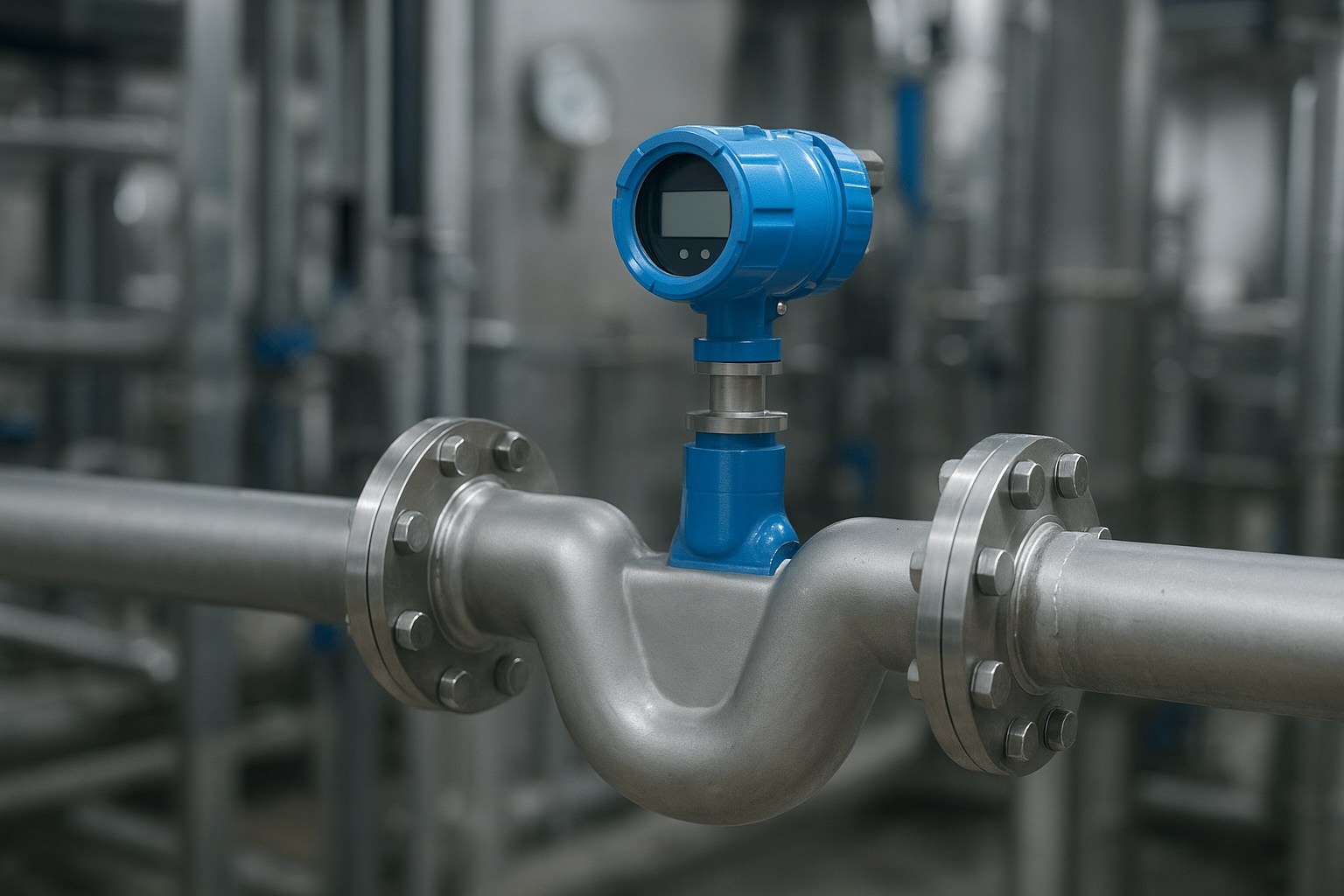
Coriolis mass flow meters are widely recognized for their high precision and reliability in measuring the mass flow of liquids and gases. Unlike volumetric flow meters, which measure the volume of a fluid passing through the meter, Coriolis meters measure the actual mass flow, making them particularly valuable in industries where accuracy and consistency are critical, such as chemical processing, oil and gas, food and beverage, and pharmaceuticals. However, despite their robust design, the accuracy of Coriolis mass flow meters can be significantly influenced by external factors, particularly temperature and pressure. Understanding these effects is crucial for ensuring optimal performance and precise measurements.
1. Overview of Coriolis Mass Flow Meter Operation
Before diving into the influence of temperature and pressure, it is important to understand how a Coriolis mass flow meter operates. The device consists of one or more vibrating tubes through which the fluid flows. As the fluid moves through these oscillating tubes, the Coriolis effect induces a phase shift or twisting motion in the tubes, which is directly proportional to the mass flow rate. Sensors detect this twist and convert it into a mass flow signal. Additionally, Coriolis meters can measure fluid density by monitoring the natural vibration frequency of the tubes.
The accuracy of this measurement relies heavily on maintaining consistent tube vibration characteristics. Any changes in temperature or pressure can affect these vibrations, potentially leading to measurement errors if not properly compensated.
2. Temperature Effects on Coriolis Mass Flow Meters
2.1 Thermal Expansion of Flow Tubes
Coriolis meters are typically constructed from stainless steel or other metallic alloys. As temperature fluctuates, the metal tubes expand or contract due to thermal expansion. This physical change can alter the natural vibration frequency of the tubes, leading to errors in density and mass flow measurement. For instance, if the tube lengthens due to heat, the meter may underestimate the mass flow, while contraction due to cooling can cause overestimation.
2.2 Changes in Fluid Properties
Temperature also affects the properties of the fluid being measured. For liquids, viscosity tends to decrease with increasing temperature, which can alter the flow profile within the tube. While Coriolis meters are generally less sensitive to viscosity changes than other flow meters, extreme temperature variations can still introduce minor errors. For gases, temperature changes impact density and compressibility, which are critical for accurate mass flow calculations.
2.3 Sensor and Electronics Sensitivity
Many Coriolis meters include temperature compensation mechanisms built into the electronics. However, extreme or rapid temperature fluctuations can affect the sensor signals themselves, causing noise or drift in the output. Modern meters often feature integrated temperature sensors to automatically compensate for these effects, but installation in thermally unstable environments can still pose challenges.
3. Pressure Effects on Coriolis Mass Flow Meters
3.1 Tube Stiffness Variation
Pressure directly impacts the stiffness of the Coriolis meter’s flow tubes. Higher pressures compress the tube slightly, increasing its natural frequency, whereas lower pressures allow the tube to be more flexible. Since the meter’s mass flow calculation depends on the tube’s vibration response, variations in pressure can affect accuracy. Most high-quality meters are calibrated to handle a specific pressure range, and operating outside of this range can introduce errors.
3.2 Fluid Density Changes
Pressure affects the density of the fluid, particularly in gases. While liquids are relatively incompressible, gases compress significantly under high pressure. Because Coriolis meters measure mass flow directly, any unaccounted change in density due to pressure fluctuations can cause discrepancies in readings. Accurate compensation for pressure is especially critical in natural gas measurement or other applications involving compressible fluids.
3.3 Pressure-Induced Mechanical Stress
High pressures can also exert mechanical stress on the meter body and mounting structures. This stress can slightly alter tube alignment or induce vibration damping, both of which can reduce measurement accuracy. Proper installation, including consideration for expansion loops or stress-free mounting, helps minimize these effects.
4. Combined Temperature and Pressure Effects
In real-world industrial processes, temperature and pressure often change simultaneously. For example, steam, high-pressure liquids, or chemical reactors can exhibit significant variations in both parameters. The interaction between temperature-induced thermal expansion and pressure-induced tube stiffness can produce complex effects on the meter’s readings.
To address this, modern Coriolis meters incorporate multi-variable compensation algorithms, which continuously monitor temperature, pressure, and tube vibrations to correct the mass flow output in real time. Without proper compensation, combined effects can lead to cumulative errors that exceed acceptable tolerance levels, especially in high-precision applications.
5. Best Practices to Maintain Accuracy
To ensure Coriolis mass flow meters perform optimally under varying temperature and pressure conditions, the following best practices are recommended:
5.1 Select the Right Meter for Operating Conditions
Choose a meter rated for the expected temperature and pressure ranges of the application. Check the manufacturer’s specifications for maximum and minimum allowable values, and consider extreme scenarios to prevent measurement errors.
5.2 Install Temperature and Pressure Compensation
Ensure the meter’s built-in temperature and pressure compensation features are active and correctly configured. In some cases, external transmitters or sensors may be necessary for enhanced accuracy in demanding environments.
5.3 Regular Calibration and Verification
Routine calibration against known standards helps maintain accuracy, particularly if the meter is exposed to frequent or extreme temperature and pressure fluctuations. Verification ensures the compensation mechanisms function as intended.
5.4 Proper Installation and Mounting
Minimize mechanical stresses by using vibration-free mounting techniques and allowing room for thermal expansion. Avoid direct exposure to extreme heat sources or pressure surges, which can impact long-term accuracy.
5.5 Monitor Environmental Conditions
Continuous monitoring of process temperature and pressure allows operators to detect conditions that may affect meter accuracy. Advanced systems can log data and trigger alerts if values exceed the compensated range.
6. Conclusion
Coriolis mass flow meters are highly accurate instruments, capable of providing precise mass flow and density measurements for a wide range of fluids. However, their accuracy is sensitive to environmental factors such as temperature and pressure. Thermal expansion, changes in fluid properties, tube stiffness variations, and mechanical stresses can all influence the measurement if not properly compensated.
By selecting meters rated for the correct operating conditions, employing temperature and pressure compensation, performing regular calibration, and following proper installation practices, industries can ensure reliable and accurate measurements even in challenging environments. Understanding and mitigating the effects of temperature and pressure is essential for maximizing the performance and lifespan of Coriolis mass flow meters
http://www.accurainstrument.com
accurainstrument -
AuthorPosts

- You must be logged in to reply to this topic.