- This topic is empty.
-
AuthorPosts
-
11/02/2026 at 17:08 #80924
When a project goes beyond standard glass sizes, searching for a custom size smart film supplier is not just a sourcing task. It is a risk decision. If every panel is slightly different, one wrong measurement or one poorly coordinated drawing can delay the whole project.
This guide walks through:
-
When and why you need custom size smart film
-
What information you must prepare before talking to a supplier
-
How a vertically integrated manufacturer like Shuifa Singyes New Materials supports custom work
-
Typical mistakes and how to avoid them
Main product reference:
Smart film products and specifications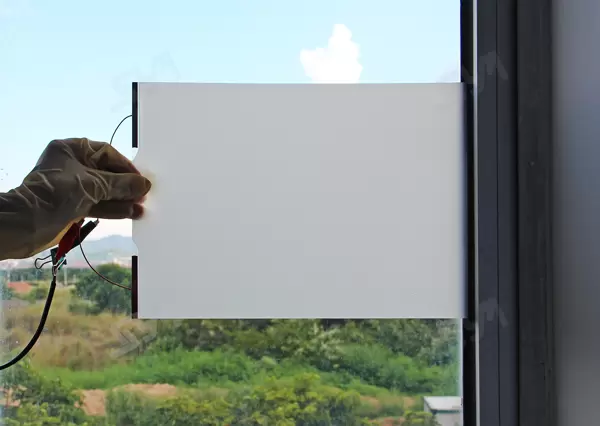
1. What “custom size smart film” really means
Smart film (usually PDLC smart film) is a functional layer that switches between opaque and transparent when powered. Most buyers already understand the basic on/off effect. Where problems start is in the details behind custom sizing.
A true custom size smart film project often involves:
-
Panels cut to exact dimensions, not standard sheet sizes
-
Mixed sizes across one project (e.g. each office or facade panel different)
-
Special shapes (doors with cut-outs, corner glass, narrow sidelights)
-
Defined busbar positions and wiring routes
-
Sometimes different types of smart film in the same project: grey, color, projection-optimized, etc.
From a manufacturing point of view, custom size means the supplier has to coordinate:
-
Film coating width
-
Cutting tolerance
-
Edge clearance
-
Busbar layout
-
Labeling and packing for easy installation on site
If any link is weak, the “custom” quickly turns into “rework on site”.
2. Scenarios where you must work with a custom size smart film supplier
Custom sizing is not just for showpiece buildings. It appears in many practical cases.
2.1 Office partitions and meeting rooms
Most glass partitions in modern open offices are:
-
Built around existing concrete columns
-
Following irregular ceiling or floor levels
-
Varying in width from panel to panel
A standard smart film roll cannot just be cut arbitrarily on site without planning. A supplier such as Shuifa Singyes New Materials can pre-cut panels, mark busbar sides, and label each panel to match the drawing.
2.2 Hotel bathrooms and suites
In hotel projects:
-
Each room type may have slightly different bathroom partition sizes
-
Some have sliding doors, some have fixed panels
-
Sometimes there are special curved corners or cut-outs
Custom size smart film ensures that:
-
Busbars are hidden within frames or hardware
-
Wiring can be routed through the ceiling or furniture
-
Privacy lines up exactly with design intent
2.3 High-end residential and villas
From living room partitions to staircase glass and skylights, residential projects often involve:
-
Irregular shapes
-
Large full-height glass in tight spaces
-
Integration with smart home control systems
A custom size smart film supplier helps coordinate these details so that each panel is cut precisely and wires appear only where expected.
2.4 Facades and curtain walls
Curtain wall glass is rarely one simple grid. There are:
-
Slope changes and corners
-
Different panel dimensions on each floor
-
Structural elements like mullions and transoms interfering with busbars
When PDLC smart film is laminated into facade glass, custom sizing is fundamental. It must match structural drawings down to the millimeter.
3. Information you should prepare before talking to a supplier
If you want a supplier to take custom work seriously, the quality of your information matters as much as their technology.
3.1 Drawings and dimensions
At minimum, prepare:
-
Panel-by-panel glass sizes (width × height)
-
Glass construction (single, laminated, double glazing)
-
Which panels need smart film and which stay clear glass
-
Tolerance range allowed (for example ±1 mm, ±2 mm)
For more complex projects, CAD drawings with clear panel numbers and a schedule table are ideal.
3.2 Frame details and visible areas
Smart film should not be exposed directly at edges where sealant or hardware will press. You should share:
-
Frame profile sections
-
Visible glass area vs. concealed area
-
Required edge clearance (for example 10–15 mm between smart film edge and glass edge)
This helps the custom size smart film supplier design the cutting pattern that fits safely behind frames.
3.3 Power and control requirements
Clarify:
-
Power supply location and type
-
How each area should be switched (single room, grouped zones, floor-wide control)
-
Whether the system will connect to building automation or smart home systems
A supplier like Shuifa Singyes New Materials can then recommend:
-
Busbar orientation (top, bottom, left, right)
-
Wiring exit direction
-
Power supply count and approximate load per line
4. What to expect from a professional custom size smart film supplier
Once you share the project details, a competent supplier will not just quote a number. They will walk you through several technical steps.
4.1 Reviewing drawings and proposing film layout
The supplier’s engineering team should:
-
Check whether panel sizes are feasible relative to film width
-
Confirm edge clearance and safety margin
-
Suggest where busbars should be located to simplify wiring
-
Flag any challenging shapes (triangles, irregular polygons, very narrow strips)
This is where having in-house ITO film production and PDLC coating, like Shuifa Singyes New Materials, is a big advantage. They understand both base film and final product limits.
4.2 Issuing a smart film “shop drawing”
Before mass production, they should issue a set of shop drawings or at least a detailed cutting list showing:
-
Exact cut size of each smart film panel
-
Panel ID corresponding to your glass schedule
-
Busbar positions and lengths
-
Electrical connection points
You review and sign off, minimizing on-site surprises.
4.3 Sample or mock-up
For important projects, a mock-up is often essential:
-
One or two panels produced to final spec
-
Installed on-site or in a showroom
-
Tested for transparency, haze, privacy, switching effect, and control system
This is also an opportunity to refine small details before full production.
4.4 Labeling, packing and logistics
On delivery, you should expect:
-
Clear labeling on each smart film or smart glass panel
-
Packing list matching drawings and IDs
-
Logical packing sequence that aligns with installation flow
These “small” steps actually define how smoothly your site work will run.
5. Why vertical integration matters for custom smart film
Many companies can purchase PDLC film, cut it, and resell it. But custom size projects become complex when:
-
Film must be matched with glass lamination
-
Large widths and long lengths are required
-
Optical uniformity is critical (office floors, hotel corridors, curtain walls)
Shuifa Singyes New Materials is different because it controls:
-
ITO film production – roll-to-roll coating with wide widths
-
PDLC formula development – tuning optical performance and stability
-
PDLC film production – multiple coating and laminating lines
-
Cut-to-size processing – precise cutting, busbar placement and slitting
-
Smart glass lamination – integrating film into safety glass
-
Smart projection system development – where film is used as projection screen
For customers, this vertical integration means:
-
Better consistency between batches
-
Technical issues can be traced and solved in-house
-
Custom requests (color, grey, projection-oriented, automotive grade) have a real path, not only marketing promises
You can explore their standard product lines and options here:
Custom smart film solutions from Shuifa Singyes New Materialshttps://www.sympdlc.com/
Shuifa Singyes New Materials Technology -
-
AuthorPosts

- You must be logged in to reply to this topic.