- This topic is empty.
-
AuthorPosts
-
31/08/2026 at 20:02 #82151
As artificial intelligence continues to transform language education, Chinese learning is moving beyond traditional vocabulary memorization and grammar exercises. Learners now expect a more personalized, practical, and interactive experience that helps them communicate confidently in real situations.
Chinesia is responding to this shift by combining AI-powered conversations, scenario-based courses, and multilingual learning support. Its goal is simple: to make AI Chinese learning more practical and help learners use Chinese naturally in everyday life.
From Knowing Chinese to Using Chinese
Many learners can recognize Chinese words and understand basic grammar but still struggle to speak when faced with a real conversation. The problem is often not a lack of knowledge, but a lack of opportunities to apply what they have learned.
Chinesia places Chinese learning within realistic situations, including:
- Meeting new people
- Ordering food and drinks
- Shopping and making payments
- Asking for directions
- Taking public transportation
- Checking into a hotel
- Communicating at work
- Joining social activities
Instead of learning isolated words and sentence patterns, users practise completing specific communication tasks. They learn how to understand a question, organize a response, and express themselves appropriately within a real-life context.
This scenario-based approach transforms Chinese from a subject to be studied into a practical tool for communication.
AI Conversations Create an Accessible Practice Environment
For learners living outside a Chinese-speaking environment, finding someone to practise with can be one of the biggest challenges.
Chinesia’s AI Tutor simulates different roles, personalities, and communication scenarios. Learners can take part in interactive conversations that reflect situations they may encounter while travelling, studying, working, or socializing.
The AI responds to each learner’s input and continues the conversation naturally. It can encourage users to introduce themselves, ask for information, express preferences, explain a problem, or complete another practical task.
If learners are unsure how to respond, they can use prompts, translations, and reference expressions to continue. This reduces the pressure of speaking Chinese and gives users more confidence to experiment with new words and sentence structures.
The purpose of AI Chinese learning is not to replace communication with real people. It is to provide a safe, flexible, and repeatable practice environment that prepares learners for real conversations.
Connecting Listening, Speaking, Learning, and Practice
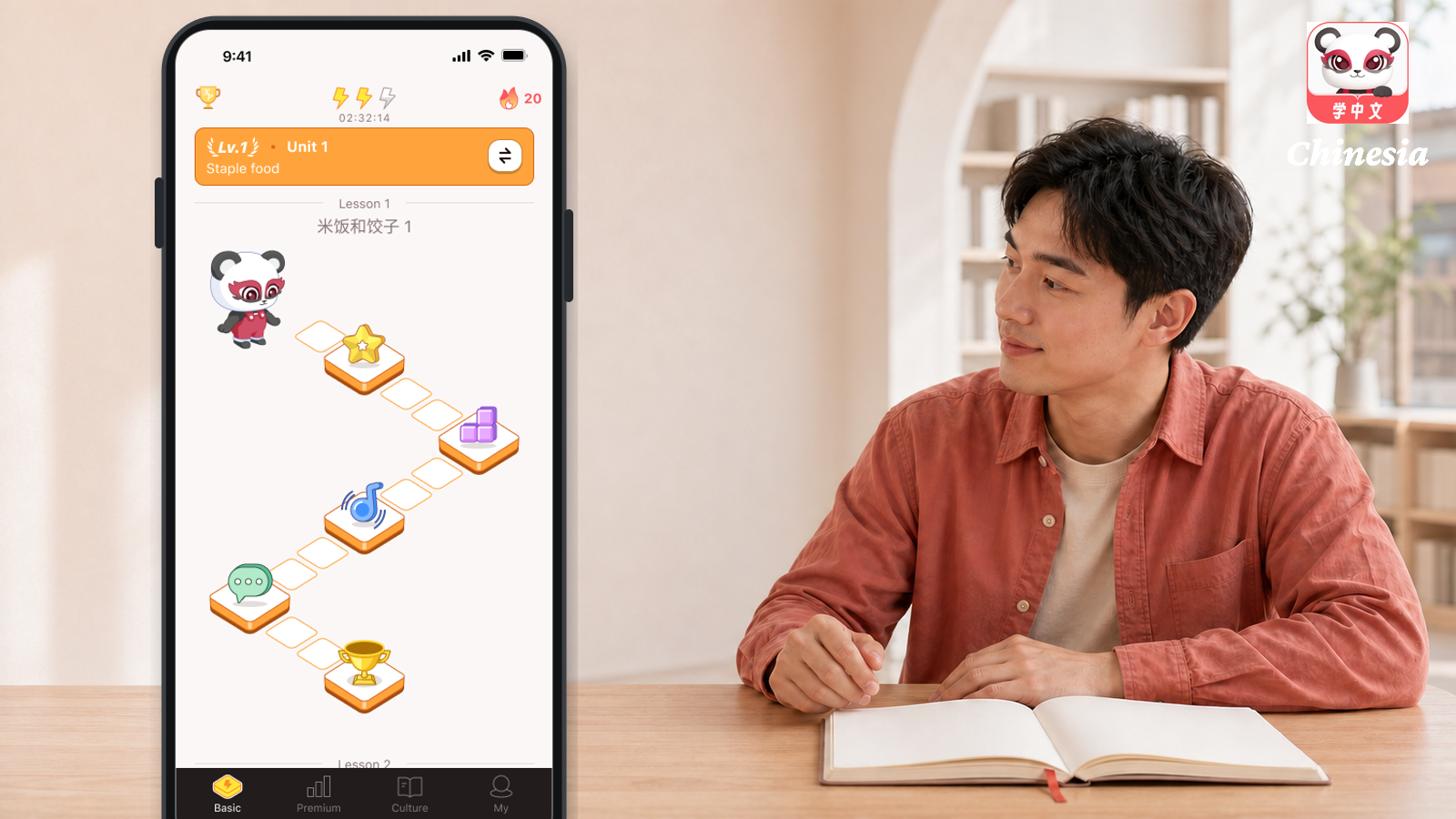
Language development requires both meaningful input and frequent output. Chinesia connects vocabulary, pronunciation, listening activities, scenario-based lessons, and AI conversations into a complete learning cycle.
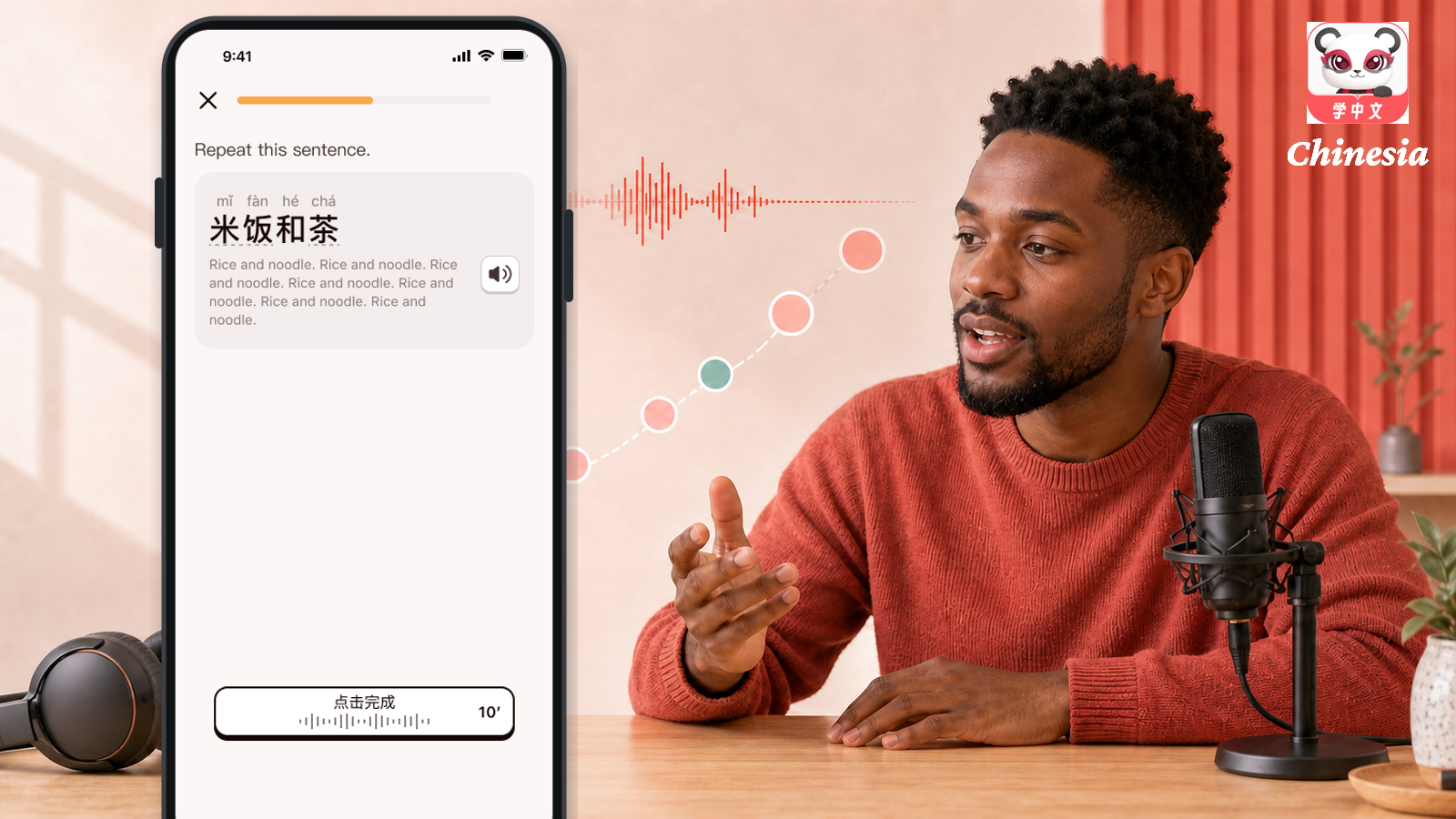
Learners can first study essential vocabulary and useful sentence patterns. They can then improve their understanding through listening and pronunciation exercises before applying what they have learned in an AI-powered conversation.
Each conversation is more than casual chatting. It gives learners an opportunity to use recently learned language to complete a realistic communication task.
By connecting learning with immediate application, Chinesia helps reduce the common gap between understanding Chinese and being able to speak it.
A Personalized Experience for Different Learning Goals
People learn Chinese for different reasons. Some are preparing for a trip, while others need Chinese for work, study, social interaction, or cultural exploration.
Chinesia considers each learner’s goals, current level, and priority skills when recommending suitable content and a learning starting point. Beginners can build a foundation through pronunciation, essential vocabulary, and simple expressions, while more experienced learners can focus on improving fluency and handling more complex conversations.
Multilingual interfaces and learning assistance also help users from different countries understand course content more easily. As learners progress, they can gradually reduce their reliance on translation and develop the ability to think and respond directly in Chinese.
Bringing AI Back to the Real Purpose of Language Learning
The value of AI in education is not simply its ability to generate more content. Its greater potential lies in making the learning process more responsive, accessible, and relevant to individual needs.
Chinesia uses realistic scenarios as the foundation of its courses and AI conversations as a bridge between knowledge and communication. Every word and sentence is connected to a situation in which learners may genuinely need to use it.
As Chinesia continues to expand its learning scenarios, AI characters, and personalized features, it aims to provide global learners with a smarter, more practical, and more engaging way to learn Chinese.
For anyone who wants to speak Chinese confidently in travel, work, study, or everyday life, Chinesia is making AI Chinese learning easier to access—and closer to real communication.
https://www.chinesia.com.cn/
Chinesia -
AuthorPosts

- You must be logged in to reply to this topic.