- This topic is empty.
-
AuthorPosts
-
22/04/2026 at 11:23 #81153
In industries where high-viscosity materials dominate the production process—such as adhesives, rubber compounds, resins, food pastes, and pharmaceutical formulations—mixing performance is often considered the primary benchmark for equipment selection. However, in real production environments, long-term performance stability is rarely determined by mixing capability alone.
Instead, it is strongly influenced by how the equipment is maintained and cleaned over time.
For Industrial Kneaders, this relationship becomes even more critical. These machines operate under high torque, process materials with strong adhesion, and rely on precise mechanical interaction between blades and material. Any deviation caused by residue buildup, thermal inefficiency, or mechanical wear will directly affect mixing behavior.
This leads to a practical and often underestimated conclusion:
The true performance of Industrial Kneaders is defined not only by design, but by the consistency of maintenance and cleaning practices.
Why High-Viscosity Processing Creates Unique Maintenance Challenges
Unlike low-viscosity mixing systems, where materials can flow freely and self-level during processing, high-viscosity materials behave differently. Their flow is limited, and their movement depends almost entirely on mechanical force.
In an Industrial Kneader, materials are continuously subjected to shear, compression, and stretching. These forces push the material into every part of the chamber, including areas where natural flow would not occur.
As a result, several challenges emerge:
Material begins to adhere to chamber walls, blade surfaces, and shaft interfaces. Over time, thin layers accumulate and gradually become thicker, especially in low-shear zones. This buildup is not uniform and often forms in corners or behind blade edges.
As residue increases, the effective working volume of the kneader decreases. This changes the internal flow pattern, reducing mixing efficiency and increasing the time required to achieve uniform dispersion.
At the same time, the resistance against blade rotation increases. This is reflected as a rise in torque, which places additional load on the drive system.
Temperature control is also affected. Residual layers act as insulation, reducing heat transfer efficiency between the jacket and the material. This leads to slower heating or cooling response and can result in uneven temperature distribution.
From an engineering perspective, these issues are interconnected:
Residue affects flow → Flow affects mixing → Mixing affects product quality
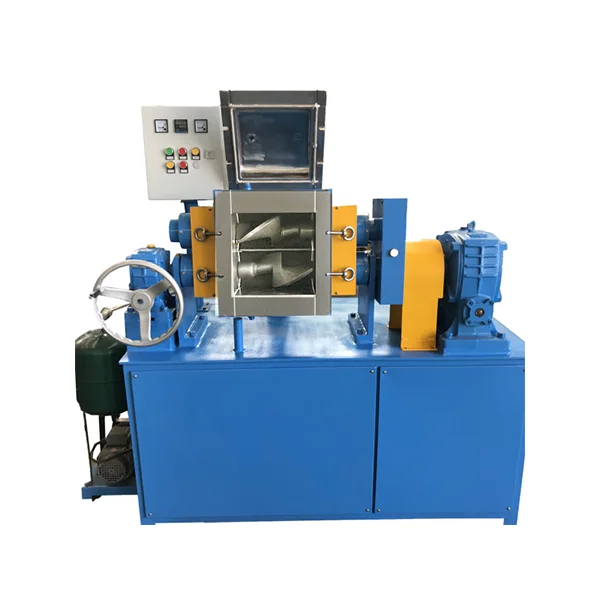
The Relationship Between Torque, Residue, and Mixing Efficiency
Torque is one of the most important indicators of the operating condition of Industrial Kneaders. In high-viscosity mixing, torque reflects the resistance encountered by the blades as they move through the material.
Under stable conditions, torque follows a predictable pattern during the mixing cycle. However, when residue accumulates, this pattern changes.
An increase in baseline torque often indicates that residual material is reducing clearance inside the chamber. This increases friction and resistance.
In addition, inconsistent torque fluctuations may suggest uneven material distribution or localized buildup.
If left unaddressed, these changes can lead to:
-
Reduced mixing efficiency due to restricted material movement
-
Increased energy consumption
-
Higher mechanical stress on components
Monitoring torque trends over time allows operators to identify when cleaning or maintenance is required before performance degradation becomes critical.
When Should Industrial Kneaders Be Cleaned?
One of the most common mistakes in production environments is relying on fixed cleaning schedules rather than condition-based decisions.
While scheduled cleaning is important, it does not always reflect the actual condition of the equipment.
In practice, cleaning should be triggered by observable changes in process behavior, such as:
-
Increased mixing time to achieve the same level of dispersion
-
Rising torque levels under similar operating conditions
-
Visible residue buildup after discharge
-
Inconsistent product quality between batches
These indicators suggest that the internal condition of the Industrial Kneader is no longer optimal.
Condition-based cleaning not only improves efficiency but also reduces unnecessary downtime.
Cleaning Strategies Based on Material Characteristics
Different materials require different cleaning approaches. A universal cleaning method is rarely effective in high-viscosity processing.
Adhesives and Chemical Compounds
Adhesives often exhibit strong adhesion to metal surfaces, making them difficult to remove once cured or partially reacted.
Solvent cleaning is commonly used in these applications. The solvent must be carefully selected to dissolve the material without damaging equipment components.
However, solvent use introduces additional considerations, including safety, environmental impact, and disposal requirements.
Rubber and Elastomer Compounds
Rubber materials tend to become more manageable when heated. Thermal cleaning uses the kneader’s jacket system to raise temperature and soften residual material.
Once softened, the material can be removed more easily through mechanical action or discharge.
This method is widely used because it avoids chemical exposure and aligns well with existing equipment capabilities.
Resin-Based Materials
Resins can behave differently depending on their formulation. Some remain thermoplastic, while others may partially cure during processing.
For thermoplastic resins, heating is effective. For thermosetting materials, mechanical removal may be necessary once curing begins.
Understanding material behavior is essential when selecting a cleaning method.
Food and Pharmaceutical Materials
In these industries, cleaning is not only about performance but also about hygiene and compliance.
Cleaning procedures must ensure complete removal of residues to prevent contamination. This often requires a combination of thermal cleaning, mechanical removal, and, in some cases, validated cleaning protocols.
Equipment Design and Its Influence on Cleaning Efficiency
The design of Industrial Kneaders plays a significant role in how easily they can be cleaned and maintained.
A Bottom Discharge Kneader allows material to exit directly from the chamber, reducing the amount of residue left behind. This makes it suitable for automated systems where frequent cleaning interruptions are undesirable.
A Screw Discharge Kneader introduces a continuous discharge mechanism. While this improves production efficiency, it also creates additional surfaces where material can accumulate, particularly along the screw.
A Hydraulic Tilting Kneader offers better accessibility. By tilting the chamber, operators can directly access internal surfaces, making manual cleaning more efficient.
The Banbury Kneader, designed for high-intensity mixing, presents the greatest cleaning challenge due to high pressure and compacted material. Cleaning such systems requires more time and often involves multiple methods.
Each configuration represents a trade-off between production efficiency and maintenance complexity.
Maintenance Beyond Cleaning: Ensuring Long-Term Stability
Cleaning addresses residue, but maintenance ensures that the equipment continues to operate as intended.
Seal systems must be inspected regularly. High-viscosity materials can penetrate small gaps, leading to leakage and contamination.
Temperature control systems require attention as well. Over time, fouling inside the jacket reduces heat transfer efficiency. This affects both heating and cooling performance, which in turn impacts material behavior.
Lubrication is another critical factor. Bearings and moving components operate under high load conditions and require consistent lubrication to prevent wear.
These maintenance activities are not independent—they collectively determine the reliability of Industrial Kneaders.
Maintenance Cycles and Operational Strategy
An effective maintenance strategy combines scheduled maintenance with condition monitoring.
Scheduled maintenance ensures that critical components are inspected at regular intervals. Condition monitoring, on the other hand, allows operators to respond to real-time changes in equipment behavior.
For example, a sudden increase in torque may trigger an inspection even if the scheduled maintenance interval has not been reached.
This hybrid approach minimizes both risk and unnecessary downtime.
Maintenance and Its Direct Impact on Production Economics
From a business perspective, maintenance is often evaluated in terms of cost. However, for Industrial Kneaders, it should be evaluated in terms of value.
Proper maintenance leads to stable mixing performance, which reduces variability in product quality. This, in turn, lowers rejection rates and material waste.
Shorter mixing cycles improve throughput, increasing production capacity without additional investment.
Reduced mechanical stress extends equipment lifespan, lowering long-term capital expenditure.
When these factors are considered together, maintenance becomes a key contributor to return on investment.
From Laboratory to Production: Maintaining Process Consistency
In many industries, production processes are developed using a Laboratory Kneader before being scaled up to industrial equipment.
To ensure successful scale-up, maintenance practices must remain consistent across different equipment sizes.
If laboratory equipment is cleaned more thoroughly than production equipment, discrepancies may arise in material behavior and product quality.
Maintaining consistent cleaning and maintenance standards ensures that process parameters remain valid during scale-up.
Maintenance as a Process Control Strategy
Industrial Kneaders are designed to process materials that are inherently difficult to handle. Their performance depends not only on mechanical design but also on how effectively they are maintained.
Cleaning removes residue, but maintenance preserves performance.
Together, they ensure that the kneader continues to deliver consistent mixing results, stable product quality, and reliable operation over time.
In high-viscosity material processing, maintenance is not a supporting activity—it is a core component of process control and production success.
http://www.globalkneader.com
Nantong Kneading Mixing Machine -
-
AuthorPosts

- You must be logged in to reply to this topic.