- This topic is empty.
-
AuthorPosts
-
20/11/2026 at 09:48 #82859
For businesses operating in outdoor commercial environments, attracting public attention is essential to building brand awareness and generating customer interest. A retail shop may provide quality products, a restaurant may offer excellent food, and a shopping complex may run attractive promotions. However, these advantages can easily go unnoticed if potential customers passing by cannot see the business or its advertising messages.
An advertising LED display offers an effective way to address this challenge. Compared with conventional printed signage, LED technology allows businesses to present bright visuals, promotional videos, brand messages, and real-time announcements. Another important advantage is the flexibility to update advertising content whenever necessary without changing the physical display.
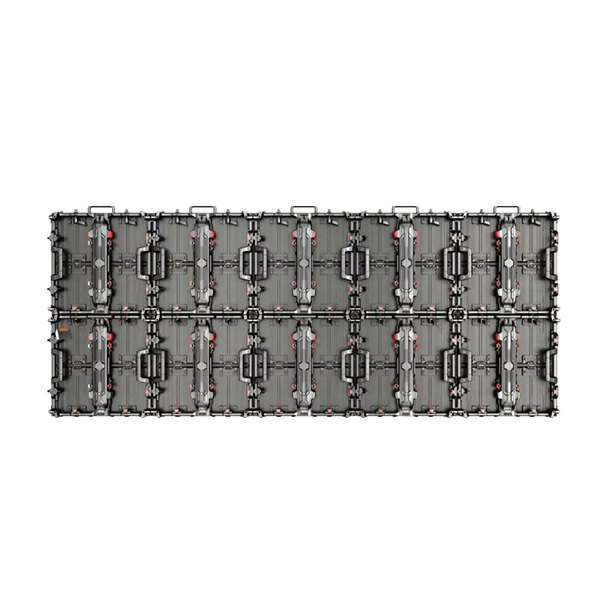
From roadside shops and retail storefronts to shopping malls, commercial buildings, and entertainment facilities, outdoor LED screens can serve as valuable communication tools. When the display is properly configured for its surroundings, it can help businesses improve visibility and create a more engaging advertising experience.
1. Capture Public Attention With Long-Distance Visibility
An important reason businesses invest in outdoor LED displays is their ability to attract attention from considerable viewing distances.
Conventional advertising signs mainly rely on fixed designs, printed colors, and external lighting. By comparison, LED screens combine vivid colors, adjustable brightness, motion graphics, and changing visual content to make advertising messages more noticeable. This is particularly beneficial in busy commercial areas where pedestrians and drivers have limited time to notice a business.
Consider a restaurant located along a busy street. An outdoor LED screen can present its business name, popular dishes, operating hours, and promotional offers in an attractive format. Similarly, a shopping mall can use digital signage to introduce new stores, advertise seasonal discounts, and announce special activities.
Nevertheless, choosing the largest or brightest screen is not always the right solution. Display dimensions, pixel pitch, brightness, installation position, and audience viewing distance should be evaluated together to achieve the desired effect.
2. Maintain Clear Visibility Under Different Lighting Conditions
Outdoor advertising equipment must deal with one major challenge: changing natural light conditions.
An LED screen that performs well inside a building may become difficult to see when exposed to strong sunlight. For this reason, outdoor LED displays require sufficient brightness and suitable optical performance to maintain image visibility during daylight hours. Depending on the installation environment, outdoor applications commonly require brightness levels of several thousand nits.
However, higher brightness does not automatically mean better performance. If the display is excessively bright during nighttime operation, it may cause visual discomfort and consume unnecessary electricity. Selecting an appropriate brightness configuration is therefore more important than simply pursuing the highest specification.
Before purchasing an outdoor advertising LED display, businesses should evaluate several environmental factors:
-
Whether direct sunlight reaches the display surface
-
The screen's orientation and installation direction
-
Differences between daytime and nighttime lighting
-
The typical distance between the screen and its audience
-
Whether automatic brightness adjustment is necessary
-
The intended advertising content and visual requirements
For example, an LED billboard installed beside a highway may require different brightness settings from a digital screen positioned near a shopping mall entrance.
3. Select the Appropriate Pixel Pitch for Better Image Quality
Brightness helps people notice an LED screen, but image resolution determines how clearly they can view its content.
Pixel pitch describes the distance between adjacent LED pixels. Generally, a smaller pixel pitch means a higher pixel density, allowing the screen to display more detailed images at relatively close viewing distances. Larger pixel pitches are often suitable for outdoor installations where audiences view the screen from farther away.
Different commercial locations therefore require different display configurations.
A digital screen installed along a pedestrian shopping street may be viewed from just a few meters away, making image detail particularly important. In contrast, a large roadside advertising billboard may be viewed from a much greater distance and may not need the same pixel density.
Businesses should first identify the typical viewing distance before deciding on pixel pitch. This helps avoid selecting an unnecessarily high-resolution configuration for long-distance advertising or a screen that lacks sufficient detail for close-range applications.
Matching pixel pitch to the actual viewing environment can also help businesses balance display performance and project costs.
4. Deliver More Advertising Messages Through Dynamic Content
Traditional printed signs generally communicate a single message until the graphics are replaced. An advertising LED display provides much greater flexibility because multiple advertising materials can be scheduled and presented on the same screen.
For example, a retail business can organize its display content into several categories:
-
Company and brand introductions
-
Newly launched product information
-
Special discounts and promotional campaigns
-
Product photographs and demonstration videos
-
Customer announcements and important notices
-
Upcoming events and social media information
This flexibility allows LED screens to serve purposes beyond conventional product promotion.
Hotels can display welcome messages, restaurant information, event schedules, and visitor guidance. Shopping complexes can arrange different advertising programs for individual tenants while also sharing public announcements. Commercial buildings can update their displayed information according to business activities and operating schedules.
As a result, an LED screen becomes a multifunctional digital communication platform rather than simply a replacement for a traditional signboard.
5. Build Stronger Brand Recognition Through Repeated Exposure
Outdoor advertising is often effective because people encounter the same business repeatedly during their daily activities.
For example, commuters may pass the same commercial building every morning, while local residents may regularly walk past a particular retail store. A strategically positioned LED display gives businesses more opportunities to communicate with these audiences.
By consistently presenting recognizable logos, brand colors, product images, and promotional videos, businesses can create a more memorable visual identity. Regularly updated content can also help maintain audience interest instead of showing the same advertisement for extended periods.
At the same time, advertising messages should remain simple and easy to understand.
People viewing outdoor screens usually have limited time to process information. Large headlines, readable fonts, clear images, sufficient contrast, and concise calls to action are generally more effective than complicated layouts filled with lengthy descriptions.
In other words, display technology helps a business gain visibility, while effective content design determines whether viewers understand and remember its message.
6. Support Advertising Needs Across Different Commercial Environments
Outdoor LED display technology can be adapted to various business settings. Although the basic technology is similar, the display configuration and content strategy should reflect the specific application.
Roadside Advertising Applications
Businesses located near busy roads need advertising screens that can communicate quickly with passing drivers and pedestrians. Large text, recognizable product images, high contrast, and straightforward promotional messages can help improve readability.
Retail Storefront Displays
Retailers can install LED screens outside their stores to introduce new collections, promote limited-time offers, and attract potential customers. Since pedestrians may watch the screen from relatively short distances, image quality and pixel pitch should be selected carefully.
Shopping Mall Advertising
Shopping centers can use outdoor LED screens to promote tenant businesses, announce special events, share public information, and display entertainment content. Multiple advertising programs can be arranged according to different promotional schedules.
Hotels and Commercial Buildings
Outdoor digital displays can help hotels and commercial properties present corporate branding, welcome visitors, advertise restaurants, and communicate information about conferences or other activities.
Sports and Entertainment Facilities
Sports venues and entertainment locations can benefit from LED displays for advertising, live information, event schedules, sponsor promotions, and announcements. The ability to update content quickly makes these screens particularly useful in environments where information changes frequently.
7. Consider Weather Protection and Maintenance for Reliable Operation
Outdoor LED displays operate in conditions that are considerably more demanding than those experienced by indoor screens.
Rainwater, dust, ultraviolet exposure, temperature fluctuations, and strong winds may all influence equipment reliability. Consequently, businesses should pay attention to cabinet protection, structural design, electrical safety, and installation quality when selecting an outdoor display.
The convenience of maintenance should also be considered during project planning.
For example, an LED screen installed on a high-rise building facade may require specialized access arrangements for technicians. If LED modules, power supplies, cables, and other internal components are difficult to reach, routine inspections and repairs can become more complicated.
A well-designed maintenance structure can help simplify servicing and reduce unnecessary operating interruptions.
Therefore, an outdoor LED display project should be evaluated as a complete installation system, including the screen itself, supporting structure, electrical components, environmental protection, and maintenance arrangements.
8. ChengVision Offers Outdoor LED Display Solutions for Various Commercial Applications
Guangdong Chengxing Electronics Co., Ltd., known internationally as ChengVision, is headquartered in Guangzhou, China. The company specializes in the research, development, manufacturing, and sales of LED display products and related technologies.
Its product portfolio covers a variety of applications, including indoor and outdoor advertising, rental LED screens, football stadium displays, LED posters, transparent LED screens, taxi-top displays, floor LED displays, and customized creative display solutions.
For outdoor applications, ChengVision offers several dedicated product series, including WH33, WL33, WD33, and WF33. Its product categories also cover indoor displays, rental solutions, creative LED products, and other display applications.
This variety is useful for commercial customers because different installation environments involve different technical requirements. A roadside advertising billboard, a retail storefront screen, a sports venue display, and a customized commercial installation may each require a different combination of display specifications and structural designs.
In addition to product development and manufacturing, ChengVision emphasizes technical innovation, product quality, management improvement, and customer service. Its development approach focuses on supporting the growing demand for informatization, digitalization, and intelligent display applications.
Businesses preparing to invest in outdoor advertising equipment can explore ChengVision's outdoor LED display products to compare available product categories and identify solutions that match their installation requirements.
9. Develop Effective Advertising Content to Maximize Display Value
Purchasing and installing an LED screen is only one part of creating a successful outdoor advertising project. The content shown on the display is equally important.
Advertising materials should be developed according to the location, audience behavior, and amount of time viewers have to read the message.
For roadside applications, viewers may only have a few seconds to recognize an advertisement. In pedestrian areas, people may have more opportunities to stop and view the displayed information. These differences should influence text length, image dimensions, animation speed, and overall content arrangement.
A straightforward advertising structure can include:
Brand + Product + Main Benefit + Call to Action
Rather than presenting a lengthy product introduction, a business could display an attractive product photograph, highlight three or four important selling points, and finish with a simple invitation to visit the store.
It is also important to test advertising materials under actual viewing conditions. Text and images that appear perfectly clear on a computer monitor may become difficult to recognize when displayed outdoors at a considerable distance.
A combination of suitable screen specifications and well-planned visual content can make advertising communication more effective.
10. Choose an LED Display Based on Real Business Requirements
The most suitable outdoor advertising LED display is not necessarily the largest or most expensive option available. Its value depends on how effectively it serves the business and its target audience.
Before selecting equipment, companies should understand the installation environment and identify the people they want to reach. They should also consider how viewers approach the screen, how long they can see it, and what information needs to be communicated.
Based on these factors, businesses can determine the appropriate technical configuration.
A practical planning checklist should cover:
-
Installation position and surrounding environment
-
Average and minimum viewing distances
-
Horizontal and vertical viewing angles
-
Natural light and sunlight exposure
-
Required screen dimensions
-
Suitable pixel pitch
-
Brightness and brightness adjustment
-
Weatherproofing and environmental protection
-
Maintenance and servicing accessibility
-
Advertising content formats
-
Daily operating hours and display schedules
Evaluating these requirements before purchasing equipment can help businesses select a more practical solution and avoid unnecessary technical specifications.
Conclusion
An advertising LED display provides outdoor businesses with a flexible way to increase visibility and communicate with potential customers. Through bright images, dynamic video content, adjustable advertising programs, and strong visual presentation, LED screens can help retail stores, restaurants, shopping centers, commercial properties, and entertainment venues attract more public attention.
Nevertheless, successful outdoor advertising involves more than installing a high-brightness screen. Pixel pitch, viewing distance, sunlight exposure, weather resistance, installation structure, maintenance convenience, and advertising content all influence the overall result.
For businesses planning an outdoor LED display project, the most effective approach is to begin with the location and target audience before determining the technical specifications. By matching display performance with real application requirements and developing suitable advertising content, businesses can make better use of LED technology as a long-term tool for outdoor promotion and brand communication.
http://www.chengvista.com
Guangdong Chengxing Electronics Co., Ltd. -
-
AuthorPosts

- You must be logged in to reply to this topic.