- This topic is empty.
-
AuthorPosts
-
02/11/2026 at 16:45 #82681
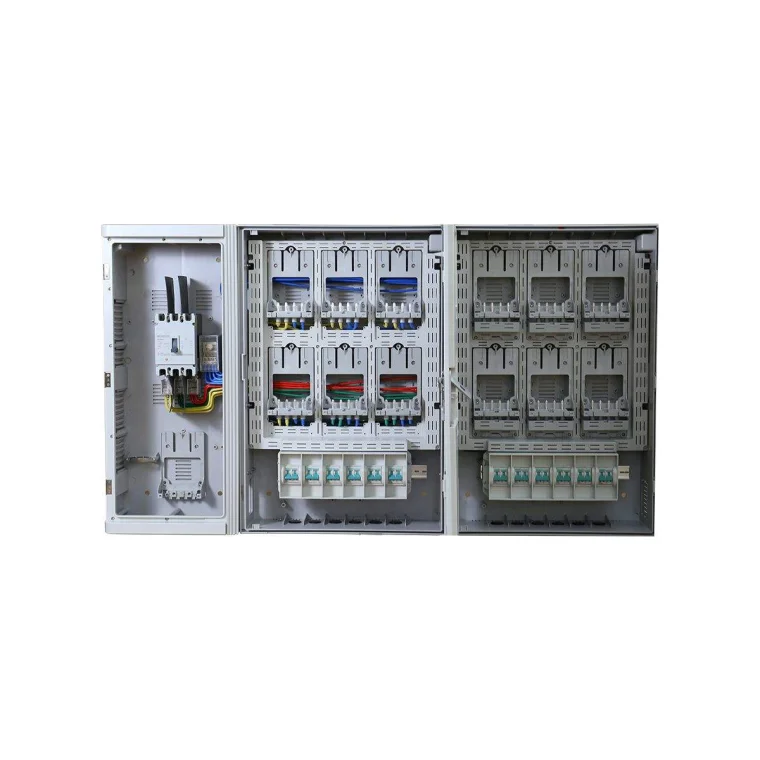
Outdoor electric meter boxes protect electricity meters, wiring connections, and associated electrical components from environmental exposure and unauthorized access. Unlike indoor enclosures, they must often withstand rain, airborne dust, humidity, temperature fluctuations, and other outdoor conditions. Choosing the appropriate Ingress Protection (IP) rating is therefore an important step in ensuring the safety, reliability, and service life of an outdoor electric meter box.
However, not every outdoor installation requires the same level of protection. A meter box mounted beneath a sheltered entrance may face different environmental challenges from one installed on an exposed exterior wall or in an industrial area with heavy dust and frequent water exposure. Selecting an enclosure with insufficient protection can increase the risk of water ingress, contamination, and equipment damage. Conversely, specifying an unnecessarily high IP rating may increase manufacturing costs without providing meaningful benefits for the application.
So, what IP rating should an outdoor electric meter box have? The answer depends on the installation environment, the expected exposure to water and dust, the enclosure's construction, and applicable electrical regulations.
This article explains how IP ratings work, compares common protection levels, and outlines the key factors buyers should consider when selecting outdoor electric meter boxes for residential, commercial, and industrial applications.
1. What Is an IP Rating for Electric Meter Boxes?
IP stands for Ingress Protection. An IP rating classifies the degree of protection provided by an enclosure against access to hazardous parts, the entry of solid foreign objects, and the ingress of water under specified test conditions.
The rating system is defined by IEC 60529, an international standard widely used to assess the ingress protection provided by electrical enclosures.
An IP rating usually consists of two digits. For example, an electric meter box rated IP54 provides a different level of protection from one rated IP65 or IP66.
The first digit describes protection against access to hazardous parts and the entry of solid foreign objects. The second digit indicates protection against water ingress.
Understanding both digits helps buyers select an outdoor electric meter box that matches the actual installation conditions.
What Does the First Digit Mean?
The first digit ranges from 0 to 6 in the commonly used IP code. Higher digits generally indicate a greater level of protection against solid foreign objects and access to hazardous parts.
First digit
Protection level
Relevance to electric meter boxes
0
No protection
Generally unsuitable where protection from contact or foreign objects is required
1
Protection against solid objects 50 mm and larger
Limited protection
2
Protection against solid objects 12.5 mm and larger
Limited protection against larger objects
3
Protection against solid objects 2.5 mm and larger
Helps prevent entry of larger tools or similar objects
4
Protection against solid objects 1 mm and larger
Provides a higher level of protection against small objects
5
Dust-protected
Some dust may enter, but not in quantities that interfere with satisfactory operation or safety under the specified conditions
6
Dust-tight
No dust ingress under the specified test conditions
For outdoor electric meter boxes, IP5X and IP6X protection may be worth considering in locations where dust exposure is a concern. However, the appropriate level depends on the environment and the requirements of the installed equipment.
A dust-tight enclosure may be particularly useful in dry, dusty, or industrial environments where airborne particles could affect electrical components.
What Does the Second Digit Mean?
The second digit describes protection against water ingress. It ranges from 0 to 9 in the IP code, with the precise test conditions depending on the digit.
Second digit
Water protection
Potential relevance
0
No protection
Generally unsuitable for outdoor exposure
1
Vertically falling water drops
Limited protection against dripping water
2
Vertically falling water drops when the enclosure is tilted up to 15°
Limited protection under specific conditions
3
Spraying water
May suit certain controlled exposure conditions
4
Splashing water from any direction
May be suitable for some sheltered outdoor locations
5
Water jets
Useful where water jets are part of the expected exposure
6
Powerful water jets
Provides a higher level of protection against specified water-jet conditions
7
Temporary immersion under specified conditions
Relevant when temporary immersion is a foreseeable risk
8
Continuous immersion under conditions agreed between the manufacturer and user
Used for applications requiring a defined immersion capability
9
High-pressure, high-temperature water jets under specified conditions
Intended for demanding cleaning environments where this exposure is relevant
These ratings are not interchangeable descriptions of general waterproofing. For example, an IP67 rating addresses temporary immersion under specified test conditions, but it does not automatically mean the enclosure is suitable for every water-jet exposure.
For most outdoor electric meter box applications, the appropriate water-protection digit should be selected according to foreseeable rain, splashing, cleaning, and other water exposure rather than assuming that the highest available rating is always necessary.
2. What IP Rating Is Recommended for an Outdoor Electric Meter Box?
There is no single IP rating that is appropriate for every outdoor electric meter box. The required protection level depends on the installation environment, applicable electrical regulations, utility requirements, and the manufacturer's intended product specification.
The following ratings are useful starting points for comparing common enclosure options.
IP44: Protection Against Splashes
IP44 provides protection against solid objects 1 mm and larger, as well as splashing water from any direction under the specified test conditions.
This rating may be considered for some sheltered installations where exposure is limited. However, it should not automatically be treated as sufficient for an outdoor meter box exposed to wind-driven rain, persistent moisture, or dust.
Before selecting IP44, buyers should confirm that the installation conditions and applicable requirements permit this level of protection.
IP54: Dust-Protected and Splash-Resistant
IP54 provides dust protection and protection against splashing water from any direction under the specified test conditions.
This can be a useful option for certain sheltered outdoor electric meter boxes or installations with moderate exposure. Nevertheless, IP54 does not establish protection against water jets or immersion.
If the enclosure is mounted in a location where rain regularly strikes the door, water collects around cable entries, or cleaning involves direct spraying, a higher level of water protection may be necessary.
IP65: Dust-Tight and Protected Against Water Jets
IP65 provides dust-tight protection and resistance to water jets under the specified test conditions.
For many exposed outdoor applications, IP65 is a practical rating to evaluate because it combines strong dust protection with a defined level of water-jet protection.
An IP65 electric meter box may be suitable for installations exposed to ordinary outdoor weather when the complete enclosure has been properly designed, tested, and installed.
However, IP65 does not guarantee protection against every environmental hazard. It does not, by itself, establish resistance to prolonged immersion, UV degradation, corrosion, or mechanical impact.
IP66: Dust-Tight and Protected Against Powerful Water Jets
IP66 provides dust-tight protection and resistance to more powerful water jets than IP65 under the specified test conditions.
It may be appropriate for outdoor electric meter boxes exposed to more demanding water-jet conditions, including certain industrial environments.
The additional protection should be justified by the expected exposure. For an enclosure installed beneath a well-protected canopy, IP66 may offer limited practical benefit over a lower suitable rating.
IP67 and IP68: When Immersion Protection Is Relevant
IP67 covers protection against temporary immersion under specified test conditions, while IP68 applies to immersion under conditions specified by the manufacturer and user within the standard's framework.
These ratings may be relevant for specialized electrical enclosures where immersion is a foreseeable hazard.
However, they should not be selected simply because a meter box is installed outdoors. Rain exposure alone does not necessarily require immersion protection.
For most projects, the starting point should be a clear assessment of dust, rain, water jets, and other actual environmental risks.
3. How to Match IP Ratings to Different Outdoor Environments
Choosing an IP rating becomes easier when the installation environment is evaluated in detail. Two outdoor electric meter boxes may be exposed to very different conditions even if both are installed outside a building.
Residential Exterior Walls
A residential meter box mounted on an exterior wall may be exposed to rain, wind, sunlight, and seasonal temperature changes.
For these applications, IP54 or IP65 may be considered depending on the degree of exposure and the applicable requirements. A sheltered location may need less water protection than an exposed wall facing prevailing winds and heavy rainfall.
Buyers should also consider the roof overhang, mounting height, cable entry position, and the likelihood of water collecting around the enclosure.
Commercial Buildings and Apartment Complexes
Commercial and residential developments may contain multiple outdoor electric meter boxes installed in common utility areas.
In these projects, consistent enclosure dimensions, reliable sealing, secure mounting, and ease of maintenance can be as important as the IP rating.
IP65 may be worth evaluating for exposed installations, particularly where dust and rain are expected. The final specification should still reflect the actual location and the requirements of the utility provider or project engineer.
Industrial Facilities
Industrial environments may expose electric meter boxes to dust, process residues, water jets, and other contaminants.
In such locations, IP65 or IP66 may be appropriate starting points for evaluation, depending on the exposure. However, an IP rating does not establish resistance to specific chemicals, oils, solvents, corrosive atmospheres, or explosive environments.
Where aggressive substances are present, material compatibility and any additional hazardous-area requirements must be assessed separately.
Coastal and High-Humidity Locations
Coastal environments can combine moisture, airborne salt, and prolonged exposure to sunlight. A suitable IP rating can help limit water and dust ingress, but it does not establish corrosion resistance or UV durability.
Buyers should therefore evaluate the enclosure material, fasteners, hinges, seals, and other components alongside the IP rating.
For example, a properly formulated plastic or composite electric meter box may avoid the rusting associated with unprotected steel, but the complete product still needs to be suitable for the specific environment.
Locations Exposed to Frequent Cleaning
Some commercial and industrial installations may be cleaned using water jets. In these cases, the pressure, temperature, direction, and frequency of cleaning must be considered.
IP65 or IP66 may be relevant depending on the specified exposure. High-pressure, high-temperature cleaning may require additional assessment rather than relying on these ratings alone.
An enclosure should not be subjected to cleaning methods beyond its rated capability, even if it is described as weatherproof.
4. Why the IP Rating Alone Is Not Enough
An IP rating is important, but it does not measure every aspect of outdoor enclosure performance. Buyers should avoid assuming that a higher IP number automatically means an electric meter box is more durable in every respect.
UV Resistance
Prolonged exposure to sunlight can degrade certain plastics, causing discoloration, surface cracking, or reduced mechanical performance.
An IP test does not establish how well a material withstands long-term ultraviolet exposure. Outdoor electric meter boxes therefore need materials and finishes suitable for the expected sunlight conditions.
Temperature Resistance
An enclosure may be exposed to high temperatures caused by direct sunlight, hot weather, or heat generated by electrical components.
The IP rating does not specify the enclosure's maximum operating temperature. Material properties, seals, internal clearances, and the temperature limits of installed components must also be considered.
Impact Resistance
An electric meter box installed in a public area, parking facility, or industrial site may be exposed to accidental impacts.
IP ratings do not establish the enclosure's mechanical impact resistance. Depending on the product and market, additional impact testing or an IK rating may be relevant.
Corrosion and Chemical Resistance
An IP rating does not demonstrate resistance to corrosion, cleaning agents, industrial chemicals, or salt-laden air.
These factors should be evaluated separately when selecting an enclosure for coastal, chemical-processing, or other demanding environments.
Electrical Safety and Fire Performance
An appropriate IP rating does not automatically confirm compliance with electrical insulation, flame-retardancy, temperature-rise, or other electrical safety requirements.
The complete electric meter box must meet the standards and regulations applicable to its intended use.
5. How Enclosure Design Affects IP Protection
Even a suitable enclosure material cannot guarantee the required IP rating if the product design and manufacturing process are inadequate.
The protection provided by an electric meter box depends on the complete assembled product, including its door, seals, cable entries, fasteners, and mounting arrangement.
Door Seals and Gaskets
Door seals help prevent water and dust from entering through the interface between the enclosure body and its cover.
The gasket material should be compatible with the operating temperature, expected environmental exposure, and enclosure design. Compression must be sufficient to maintain the seal without causing excessive deformation or premature wear.
A damaged, incorrectly installed, or poorly fitted gasket can compromise the intended ingress protection.
Cable Entries and Conduit Openings
Cable entries are common potential paths for water and dust ingress. Their design should match the installation method and the required IP rating.
Cable glands, conduit fittings, and other entry components should be suitable for the enclosure and correctly installed. Unused openings must be sealed using appropriate components.
Drilling additional holes into a tested enclosure without a suitable sealing method can compromise its original protection level.
Hinges, Fasteners, and Joints
Hinges and fasteners must support the enclosure cover while maintaining the required alignment and sealing pressure.
Uneven joints, loose fasteners, and dimensional inconsistencies can create gaps that allow contaminants to enter.
For this reason, manufacturing precision and assembly quality are essential when producing outdoor electric meter boxes with defined ingress protection requirements.
Ventilation and Drainage
Some electrical enclosures require ventilation or condensation-management features. These must be engineered carefully because openings can affect the overall IP rating.
Where ventilation is necessary, suitable protective components and a verified enclosure design can help balance airflow requirements with environmental protection.
Drainage features must likewise be designed so that they do not compromise the intended protection level.
Conclusion
Choosing the right IP rating for an outdoor electric meter box starts with understanding the installation environment and identifying the actual risks posed by dust, rain, water jets, and other forms of exposure. IP54 may be suitable for some sheltered locations, while IP65 or IP66 may be more appropriate for many exposed or demanding outdoor applications. The final selection should always follow the applicable standards, project specifications, and verified performance of the complete enclosure.
Beyond ingress protection, material durability, sealing design, manufacturing precision, and quality control all contribute to reliable performance. With over 20 years of experience in complex plastic and metal structural parts, mold manufacturing, hardware accessories, and stamping parts, Quansheng provides OEM and ODM services supported by its own R&D center, mold workshop, injection molding workshop, and sheet metal workshop. These integrated manufacturing capabilities support the development and production of customized electric meter boxes, helping customers address different enclosure designs, material requirements, and application-specific performance needs.
http://www.quan-sheng.net
quansheng -
AuthorPosts

- You must be logged in to reply to this topic.