- This topic is empty.
-
AuthorPosts
-
21/09/2026 at 14:54 #82332
Electricity meters installed outdoors are exposed to conditions that are very different from those found in controlled indoor environments. Rain, dust, sunlight, temperature fluctuations, humidity, impact, chemicals, and long-term weathering can all affect the reliability of metering equipment. For three-phase power measurement systems, the enclosure surrounding the meter is therefore more than a protective shell. It is an important part of the overall metering solution.
A well-designed three-phase electricity meter casing helps protect electrical components from external conditions while providing sufficient space for installation, wiring, inspection, and maintenance. For utility companies, electrical contractors, equipment manufacturers, and system integrators, selecting the right casing can have a direct impact on equipment service life and maintenance requirements.
Outdoor applications also create additional design challenges. A casing that performs well inside a building may not provide sufficient protection when exposed to direct sunlight, driving rain, airborne dust, or large temperature changes. This makes material selection, sealing, mechanical strength, thermal management, and installation design important considerations when choosing an outdoor meter enclosure.
This article examines the major factors that should be considered when selecting a three-phase electricity meter casing for outdoor and harsh environments, with a focus on practical requirements for buyers and equipment manufacturers.
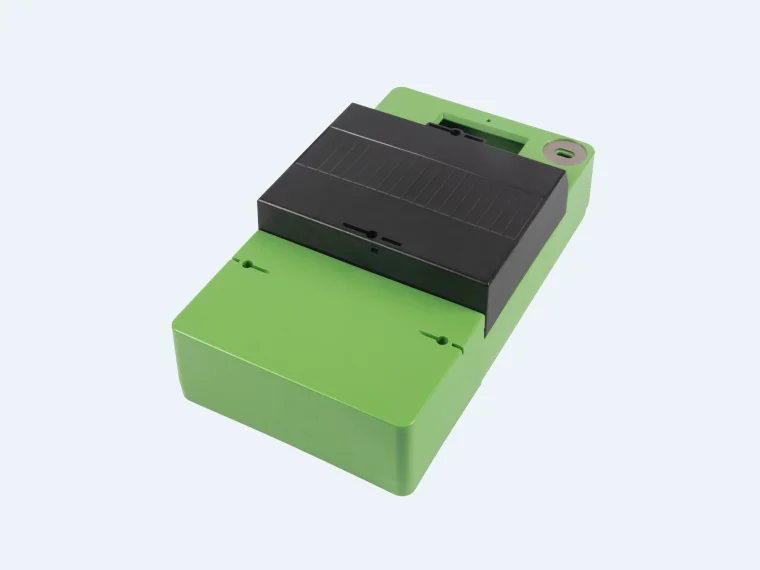
Why Outdoor Three-Phase Meters Need Reliable Casing Protection
Three-phase electricity meters are widely used in commercial buildings, industrial facilities, power distribution systems, renewable energy installations, utility networks, and other applications where electrical consumption or distribution needs to be monitored.
When the meter is installed indoors, the surrounding environment usually provides a certain level of protection. Outdoor installations are different. The meter may be directly exposed to:
-
Rain and water spray
-
Dust and airborne particles
-
High humidity
-
Direct sunlight
-
Ultraviolet radiation
-
Extreme temperatures
-
Temperature cycling
-
Wind and vibration
-
Accidental impact
-
Corrosive atmospheric conditions
-
Insects and other contaminants
The casing must therefore provide a controlled environment around the meter and associated electrical components.
A suitable three-phase electricity meter enclosure should prevent environmental contaminants from easily reaching sensitive internal components while maintaining sufficient accessibility for authorized personnel. It should also remain mechanically stable throughout the expected service life of the installation.
The objective is not simply to make the casing as thick or heavy as possible. Instead, the enclosure needs to achieve an appropriate balance between protection, durability, weight, manufacturability, installation convenience, and cost.
Material Selection Is a Critical Design Decision
One of the first questions buyers should consider is what material should be used for the three-phase electricity meter casing.
Different materials offer different combinations of mechanical strength, weather resistance, electrical insulation, weight, and manufacturing flexibility. Common choices include engineering plastics, polycarbonate, ABS-based materials, sheet metal, stainless steel, and other application-specific materials.
For many outdoor metering applications, engineered polymer housings can provide several advantages. They can offer electrical insulation, relatively low weight, good impact resistance, and flexibility in enclosure design. Plastic housings can also be manufactured with integrated mounting structures, cable entry areas, viewing windows, hinges, and other features.
Metal housings can be advantageous where higher mechanical strength, vandal resistance, or specific environmental protection is required. However, the material and surface treatment must be carefully considered when the casing is exposed to moisture or corrosive environments.
For industrial or coastal installations, corrosion resistance can become particularly important. A casing material that performs well in a dry urban environment may require additional protection in an area with salt spray or chemically aggressive atmospheric conditions.
Therefore, material selection should be based on the actual installation environment rather than simply choosing the most commonly used material.
Protection Against Water and Moisture
Water ingress is one of the most important concerns for an outdoor electricity meter.
Rainwater can enter an enclosure through poorly sealed joints, cable entry points, covers, hinges, ventilation openings, or gaps between different components. Once moisture reaches internal electrical components, it can contribute to corrosion, insulation degradation, electrical faults, and premature component failure.
A well-designed three-phase electricity meter casing should therefore consider the complete enclosure structure rather than relying on the casing material alone.
Important design elements may include:
-
Proper sealing between the cover and body
-
Appropriate gasket design
-
Protected cable entry points
-
Secure fastening systems
-
Properly designed drainage or water management features
-
Suitable mounting orientation
-
Controlled access openings
The sealing system should remain effective during repeated opening and closing if the meter requires periodic inspection or maintenance.
Buyers should also consider how the enclosure will be installed. Even a well-sealed casing may experience water ingress if cable glands are incorrectly installed or if the casing is positioned in a way that allows water to accumulate around openings.
Dust and Particle Protection
Outdoor electrical equipment can also be exposed to dust, sand, industrial particles, and other airborne contaminants.
Fine particles can accumulate around electrical terminals and internal components. In industrial environments, conductive or chemically active dust may create additional risks.
For this reason, the design of a three-phase electricity meter enclosure should minimize unnecessary openings and provide appropriate sealing around access points.
The required level of dust protection depends on the installation environment. A residential outdoor meter box may have different requirements from an enclosure installed near a cement plant, mining operation, agricultural facility, or industrial production line.
The enclosure should therefore be selected according to the actual environmental conditions rather than based solely on whether the meter is classified as an "outdoor" product.
UV Resistance for Long-Term Outdoor Use
Direct sunlight is another factor that is often overlooked when selecting an outdoor meter casing.
Many polymer materials can gradually change when continuously exposed to ultraviolet radiation. Depending on the material and formulation, prolonged UV exposure may cause discoloration, surface degradation, brittleness, or loss of mechanical performance.
A weather-resistant three-phase electricity meter casing should therefore use materials or formulations suitable for the intended outdoor exposure.
UV resistance becomes especially important when the casing is installed:
-
On exterior walls
-
On utility poles
-
In open electrical cabinets
-
On outdoor distribution equipment
-
In solar energy installations
-
In exposed industrial areas
The expected service life should be considered during material selection. A casing that performs well during short-term testing may not necessarily provide the same performance after years of direct sunlight.
Temperature Resistance and Thermal Management
Outdoor environments can experience substantial temperature variations.
A meter installed in direct sunlight can become significantly warmer than the surrounding air. At night or during cold weather, the enclosure may experience rapid temperature reduction. Seasonal changes can produce repeated thermal expansion and contraction.
This creates several design considerations for a three-phase electricity meter casing.
The casing material must maintain appropriate mechanical properties across the expected temperature range. At the same time, the enclosure should allow the internal components to operate within their specified temperature limits.
Thermal management does not always mean adding ventilation openings. Openings may make it easier for dust and moisture to enter. Instead, designers may need to consider material selection, enclosure geometry, internal component arrangement, heat dissipation paths, and installation location.
In some applications, a light-colored or reflective external surface can also help reduce solar heat absorption. The appropriate approach depends on the meter's internal heat generation and environmental conditions.
Impact Resistance Matters in Public and Industrial Areas
Outdoor meters are not always installed in protected locations.
Equipment mounted in public areas, construction zones, factories, warehouses, parking facilities, or utility infrastructure may be exposed to accidental impact. Tools, equipment, vehicles, or other objects could potentially strike the enclosure.
A robust three-phase electricity meter casing should therefore provide sufficient mechanical strength for its application.
The required impact resistance depends on the installation environment. A residential wall-mounted meter may have relatively modest requirements, while a meter located in an industrial facility may require a more durable enclosure.
Wall thickness, structural ribs, material properties, mounting points, cover design, and fastening methods can all affect the mechanical performance of the casing.
The goal is to protect the meter without unnecessarily increasing material consumption or making the product difficult to install.
Sealing Design Should Include Cable Entry Points
One common weak point in outdoor electrical enclosures is not the main casing itself but the cable entry area.
Power and communication cables must enter the enclosure, creating openings that can potentially allow water and dust to enter.
A properly designed three-phase electricity meter casing should therefore consider cable routing from the beginning of the enclosure design process.
Depending on the application, the casing may incorporate:
-
Cable gland mounting areas
-
Knockout sections
-
Predefined cable entry holes
-
Sealing interfaces
-
Strain-relief structures
-
Separate wiring compartments
Cable entry locations should also allow installers to route cables without creating excessive bending or mechanical stress.
For large-volume projects, standardized cable entry structures can simplify installation and improve consistency across different sites.
Transparent Covers and Meter Visibility
Many electricity meter installations require the meter display to remain visible without opening the enclosure.
In such cases, the casing may incorporate a transparent viewing window or a transparent cover section.
This feature can improve operational convenience because technicians or authorized personnel can inspect meter readings without exposing internal components to the external environment.
However, the transparent section must be considered as part of the overall enclosure protection system.
The material should provide suitable optical clarity while maintaining adequate mechanical strength and weather resistance. UV exposure should also be considered if the window is permanently exposed to sunlight.
The interface between the transparent section and the main housing needs to be properly sealed. A poorly designed viewing window can become a weak point for water ingress.
Security and Tamper Resistance
Electricity meters are often installed in locations where unauthorized access must be controlled.
The enclosure can therefore contribute to system security through its cover design, fastening method, locking mechanism, and internal layout.
A suitable three-phase electricity meter housing may incorporate provisions for seals, security screws, locks, or other access-control mechanisms depending on the project requirements.
The design should distinguish between routine maintenance access and unauthorized access. Authorized technicians should be able to open the enclosure efficiently, while casual access should be discouraged.
For utility applications, tamper-resistant design can be particularly important because the enclosure may be located in publicly accessible areas.
Designing for Different Outdoor Environments
Not every outdoor environment is equally harsh. A useful approach is to classify the installation conditions before selecting the casing.
Urban Outdoor Installations
Urban electricity meters may experience rain, sunlight, dust, pollution, and temperature changes. In many cases, weather resistance, UV stability, sealing, and easy maintenance are the primary concerns.
Coastal Environments
Coastal areas introduce salt-laden air and higher corrosion risks. Material selection and corrosion resistance become particularly important. Metal components, fasteners, hinges, and mounting hardware should receive careful attention.
Industrial Environments
Industrial facilities can expose meter casings to dust, vibration, chemicals, mechanical impact, and elevated temperatures.
The casing design should therefore reflect the specific industrial process rather than treating all factories as the same environment.
Agricultural Applications
Agricultural facilities can have high humidity, dust, fertilizers, chemicals, and biological contaminants. Enclosure sealing and material resistance may be especially important in these applications.
Solar and Renewable Energy Installations
Outdoor metering equipment used in solar power systems can experience prolonged sunlight exposure and considerable temperature changes. UV resistance and thermal considerations are therefore important when selecting a three-phase electricity meter casing.
Why Custom Casing Design Can Be Beneficial
Standard enclosures can meet many common requirements, but custom designs may be more appropriate when the meter has unusual dimensions, wiring arrangements, installation conditions, or communication components.
A custom three-phase electricity meter casing can be designed around the actual meter and installation requirements.
Customization may involve:
-
Overall enclosure dimensions
-
Mounting holes
-
Cable entry locations
-
Display windows
-
Terminal access
-
Locking structures
-
Internal supports
-
Label areas
-
Cover configuration
-
Material selection
-
Surface finish
For equipment manufacturers purchasing large quantities, custom casing development can also improve assembly efficiency.
However, customization should begin with a clear understanding of the application. Changing dimensions or adding features without considering sealing, mechanical strength, manufacturing tolerances, and installation requirements can create new problems.
Manufacturing Quality Is as Important as Design
Even a well-designed meter enclosure can fail to perform properly if manufacturing quality is inconsistent.
For plastic housings, factors such as molding conditions, dimensional accuracy, material consistency, warpage, surface defects, and assembly tolerances can affect final performance.
For metal enclosures, cutting accuracy, forming quality, welding, coating, corrosion protection, and dimensional consistency should be controlled.
A reliable three-phase electricity meter casing manufacturer should therefore have appropriate quality-control procedures throughout production.
Buyers should consider asking suppliers about:
-
Material specifications
-
Production processes
-
Dimensional tolerances
-
Environmental testing
-
Mechanical testing
-
Sealing performance
-
UV resistance
-
Quality inspection procedures
-
Sample approval processes
-
Mass-production consistency
For large projects, production consistency can be just as important as the performance of an individual sample.
Final Considerations
Choosing a three-phase meter enclosure for an outdoor installation should be treated as an engineering decision rather than simply a purchasing decision. The casing has to protect the meter from the environment while supporting installation, maintenance, security, and long-term operation.
Material selection, water and dust protection, UV resistance, temperature performance, impact resistance, cable entry design, viewing windows, security features, and manufacturing quality all contribute to the final performance of the enclosure.
For buyers, the best approach is to start with the actual installation environment and define the required protection level before comparing products. A reliable three-phase electricity meter casing should be designed around real operating conditions, not just laboratory specifications or appearance.
Whether the application involves residential utility metering, commercial buildings, industrial facilities, renewable energy systems, or outdoor distribution equipment, the right casing can provide an important layer of protection for the metering system.
For OEM and wholesale projects, working with an experienced casing manufacturer can also make it easier to customize dimensions, mounting structures, cable entries, materials, and other features according to the meter and installation requirements. This combination of appropriate design, suitable materials, controlled manufacturing, and application-specific testing is the foundation for a durable outdoor metering enclosure.
http://www.quan-sheng.net
quan-sheng -
-
AuthorPosts

- You must be logged in to reply to this topic.