- This topic is empty.
-
AuthorPosts
-
28/08/2026 at 16:47 #82123
In the competitive outdoor furniture and commercial seating market, manufacturers are expected to deliver products that combine durability, attractive appearance, and cost efficiency. While raw materials and production equipment often receive significant attention, the rotomolding chair mold is one of the most influential factors in determining manufacturing cost over the entire product lifecycle.
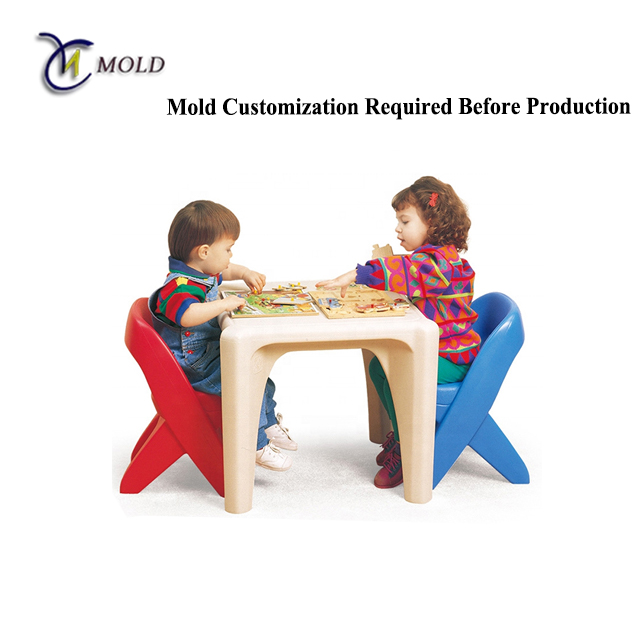
A well-engineered mold does much more than shape plastic. It affects heating efficiency, cooling time, material distribution, product consistency, maintenance frequency, and even future product upgrades. For manufacturers planning medium- or high-volume production, investing in the right rotomolding chair mold often delivers greater long-term value than focusing solely on minimizing initial tooling costs.
Why Mold Design Has a Direct Impact on Manufacturing Cost
Unlike injection molding, rotational molding is characterized by relatively long heating and cooling cycles. Since every production cycle repeats thousands of times throughout the mold's service life, even small improvements in cycle efficiency can generate substantial cost savings.
For example, reducing the molding cycle by just two minutes on a production line operating continuously can significantly increase annual output without adding new equipment. A properly designed rotomolding chair mold helps optimize heat transfer and cooling performance, allowing manufacturers to improve productivity while lowering energy consumption.
At the same time, consistent mold performance minimizes rejected products, reducing waste of polyethylene material, labor, and production capacity.
Achieving Uniform Wall Thickness
Wall thickness consistency is one of the most important quality indicators for rotationally molded chairs.
Unlike pressurized molding processes, polyethylene powder gradually melts and coats the inner cavity as the mold rotates. The geometry of the mold therefore determines how evenly the material is distributed.
Areas such as seat corners, armrests, and leg connections are particularly susceptible to uneven material accumulation.
A professionally engineered rotomolding chair mold uses optimized cavity design, balanced rotation characteristics, and carefully positioned vent systems to improve material flow during heating.
The result includes:
-
Better structural strength
-
More consistent product weight
-
Improved dimensional accuracy
-
Lower deformation after cooling
-
Reduced material waste
Consistent wall thickness also enhances load-bearing performance, which is especially important for commercial seating applications used in hotels, restaurants, parks, resorts, and public facilities.
Heat Transfer Efficiency Determines Productivity
Heat transfer is one of the key factors affecting production efficiency.
If the mold heats unevenly, certain areas require additional oven time before the plastic fully melts. This increases energy consumption while creating greater differences in wall thickness.
High-quality aluminum molds provide excellent thermal conductivity, allowing heat to spread rapidly across the entire cavity surface.
For fabricated molds, experienced manufacturers optimize structural reinforcement without creating excessive thermal mass that slows heating and cooling.
The objective is not simply faster heating, but balanced heating that ensures every section of the chair reaches the proper processing temperature simultaneously.
Efficient thermal performance contributes to:
-
Shorter production cycles
-
Lower energy costs
-
Better surface finish
-
Improved dimensional stability
Surface Quality Starts with Mold Precision
Consumers increasingly expect outdoor furniture to deliver both functionality and premium aesthetics.
The surface quality of a rotationally molded chair is largely determined by mold manufacturing precision.
Precision CNC machining produces smooth cavity surfaces and accurate parting lines, reducing flash formation and minimizing post-processing requirements.
Depending on customer requirements, a rotomolding chair mold can reproduce various textures directly during molding, including:
-
Fine matte finishes
-
Leather grain textures
-
Sandblast effects
-
Decorative patterns
-
Customized branding or logos
Producing these finishes directly in the mold eliminates secondary finishing processes, improving production efficiency while maintaining consistent product appearance.
Designing for Easy Demolding
Although rotational molding operates without high injection pressure, product removal remains an important part of every production cycle.
Complex chair geometries can increase demolding difficulty if draft angles and structural details are not carefully designed.
Proper mold engineering considers:
Adequate draft angles
Smooth transition radii
Optimized parting lines
Strategic vent placement
Balanced structural reinforcement
These design elements reduce deformation during mold opening and minimize operator effort, especially when producing larger commercial seating products.
Easy demolding also decreases the likelihood of scratches or cosmetic defects that would otherwise require rework.
Mold Durability Influences Total Ownership Cost
A rotomolding chair mold represents a long-term manufacturing investment.
Rather than focusing only on initial tooling price, manufacturers should evaluate the total cost of ownership over the mold's operational life.
Several factors contribute to long service life:
High-quality aluminum or steel materials
Precision welding techniques
Accurate machining tolerances
Corrosion-resistant surface treatment
Rigid structural reinforcement
Regular preventive maintenance further extends mold life. Cleaning vents, inspecting sealing surfaces, checking alignment, and repairing minor wear before it becomes significant help maintain stable production quality over thousands of molding cycles.
A durable mold reduces unplanned downtime and lowers replacement costs throughout the production lifecycle.
Flexibility for Future Product Development
Furniture collections frequently evolve to match changing market trends.
Manufacturers may introduce new colors, branding elements, ergonomic improvements, or matching product families.
An experienced mold supplier considers future product development during the initial design phase.
Modular mold concepts, replaceable inserts, and adaptable structural features can simplify future modifications without requiring completely new tooling.
This flexibility shortens development cycles and allows manufacturers to respond more quickly to changing customer demands.
Why Work with XINGHUI MOLD
Choosing the right mold manufacturer is just as important as selecting the mold design itself.
XINGHUI MOLD is one of China's experienced manufacturers specializing in rotational molding molds, vacuum forming molds, blow molding molds, foam molds, and custom rotational molding products. The company's expertise covers a wide range of industries, including outdoor furniture, leisure equipment, kayaks, canoes, water sports products, industrial tanks, automotive components, and customized plastic products.
For rotomolding chair mold projects, XINGHUI MOLD emphasizes engineering collaboration from the early design stage through mold manufacturing and production support. Its engineering team evaluates product structure, mold feasibility, material flow characteristics, wall thickness distribution, cooling efficiency, and manufacturing practicality to help customers achieve reliable production and consistent product quality.
By combining advanced machining capabilities with extensive rotational molding experience, XINGHUI MOLD delivers tooling solutions designed for long service life, stable performance, and efficient mass production.
Conclusion
The performance of a rotomolding chair mold extends far beyond shaping a plastic chair. It determines production efficiency, product consistency, energy consumption, maintenance frequency, and overall manufacturing cost.
Manufacturers seeking higher productivity and long-term profitability should evaluate mold design from a lifecycle perspective rather than focusing only on tooling price. Factors such as thermal efficiency, wall thickness control, surface precision, durability, and future product flexibility all contribute to sustainable manufacturing performance.
Working with an experienced mold manufacturer like XINGHUI MOLD provides access to professional engineering support and reliable tooling solutions, helping furniture manufacturers produce high-quality rotationally molded chairs with greater efficiency and lower total production costs.
http://www.xinghuimould.com
Ningbo Xinghui Rotational Molding Technology Co., Ltd. -
-
AuthorPosts

- You must be logged in to reply to this topic.