- This topic is empty.
-
AuthorPosts
-
28/08/2026 at 16:39 #82117
One of the greatest challenges in implant prosthetics is not manufacturing a crown that fits the model, but producing one that fits the patient's implant accurately the first time. Every adjustment made during chairside delivery increases treatment time, affects patient experience, and adds hidden costs for both clinics and laboratories.
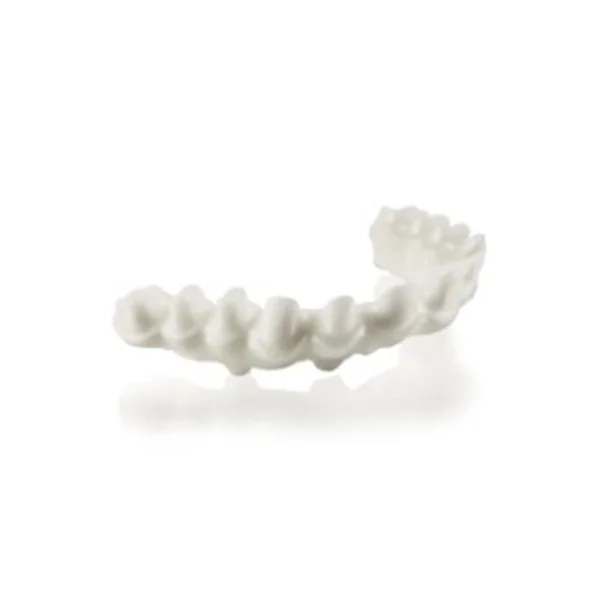
As digital dentistry becomes the standard of care, implant zirconia crowns are increasingly produced through highly controlled digital manufacturing processes rather than traditional manual workflows. The objective is no longer simply creating restorations with natural esthetics; it is achieving predictable accuracy that minimizes clinical adjustment while improving long-term functional performance.
For dental laboratories serving international markets, manufacturing consistency has become just as important as material quality.
Every Micron Matters at the Implant Connection
Unlike conventional crowns supported by natural teeth, implant restorations rely on mechanical connections with extremely tight tolerances.
The interface between the implant fixture, abutment, and zirconia crown must distribute chewing forces evenly while maintaining stable fixation during years of function.
Even microscopic dimensional deviations may influence seating accuracy or increase mechanical stress within the implant system. Although these deviations may not be immediately visible, they can contribute to long-term complications such as screw loosening, component wear, or prosthetic instability.
For this reason, manufacturing precision has become one of the primary evaluation criteria when selecting a laboratory for implant zirconia crowns.
Digital Data Eliminates Multiple Sources of Error
Traditional workflows involve numerous physical processes, including impression taking, gypsum pouring, die trimming, wax-up fabrication, and manual framework production. Each stage introduces small dimensional changes that accumulate throughout manufacturing.
Digital workflows eliminate many of these variables.
High-resolution intraoral scans capture implant positions directly, while CAD software preserves this information without repeated physical transfer. Digital models remain stable regardless of transportation distance, environmental humidity, or storage time.
The resulting workflow improves consistency while allowing clinicians and technicians to collaborate using identical digital datasets.
For international cases, this digital communication significantly shortens production cycles and reduces logistical complexity.
High-Precision Milling Improves Restoration Consistency
Once digital design has been completed, manufacturing accuracy depends heavily on machining capability.
Modern five-axis milling centers produce implant zirconia crowns with exceptional dimensional consistency by controlling tool orientation throughout complex geometries. Intelligent machining strategies minimize vibration while preserving fine anatomical details and precise implant interfaces.
Following milling, zirconia undergoes controlled sintering to achieve its final mechanical properties. Because zirconia contracts during this process, advanced manufacturing software automatically compensates for material shrinkage before machining begins.
This integration of digital design, machining compensation, and thermal control enables laboratories to produce restorations with highly repeatable accuracy.
Material Quality Influences Long-Term Performance
Not all zirconia materials perform identically.
Dental laboratories increasingly select multilayer zirconia materials that combine natural translucency with high mechanical strength. Optimized grain structures improve fracture resistance while maintaining color gradients that better replicate natural teeth.
Material stability is equally important during long-term intraoral service. High-quality zirconia demonstrates excellent wear resistance, chemical stability, and biocompatibility, making it suitable for demanding implant restorations in both anterior and posterior regions.
Selecting premium zirconia materials reduces the likelihood of chipping, discoloration, or mechanical degradation throughout the restoration's service life.
Digital Support Extends Beyond Manufacturing
The value of digital dentistry is not limited to laboratory production.
Advanced digital support services—including intraoral scanning assistance, implant planning, PIC precise implant positioning, and virtual treatment coordination—help clinicians simplify complex implant cases before manufacturing even begins.
For full-arch restorations such as All-on-4 treatments, accurate digital implant positioning significantly improves prosthetic design while reducing adjustment during final delivery.
This integrated workflow strengthens collaboration between clinics and laboratories, creating a more predictable restorative process from diagnosis through final placement.
Jiahong Dental Laboratory Delivers Complete Digital Implant Solutions
Since its establishment in 1999, Jiahong Dental Laboratory has continuously expanded its digital manufacturing capabilities to meet the growing demands of modern implant dentistry.
Its CAD/CAM center integrates digital scanning technologies, 3D printing equipment, precision milling machines, and intelligent production systems to manufacture high-quality implant restorations with excellent consistency. Combined with digital oral scanning services and PIC implant positioning support, Jiahong enables faster communication between clinics and laboratories while improving restoration accuracy for overseas customers.
This comprehensive digital ecosystem allows the company to provide cost-effective, reliable implant zirconia crowns that satisfy both functional and esthetic expectations across diverse clinical applications.
Conclusion
As implant treatment becomes increasingly digital, restoration quality depends less on manual adjustment and more on engineering precision throughout the manufacturing process. High-quality implant zirconia crowns combine advanced zirconia materials, digital data acquisition, precision CAD/CAM manufacturing, controlled sintering, and rigorous quality inspection to achieve predictable clinical outcomes.
Dental laboratories investing in comprehensive digital production capabilities are better positioned to reduce remakes, improve restoration accuracy, shorten delivery times, and support clinicians with dependable implant solutions that meet the expectations of today's global dental market.
http://www.jiahongdentallab.com
Shenzhen Jiahong Dental Technology Co., Ltd. -
AuthorPosts

- You must be logged in to reply to this topic.