- This topic is empty.
-
AuthorPosts
-
06/05/2026 at 13:54 #81198
Outdoor living spaces have become an essential extension of modern homes. Whether it’s a garden, terrace, balcony, or poolside area, people are increasingly investing in comfortable and stylish seating to enjoy fresh air and leisure time. Among the most popular choices today is the outdoor corner sofa, which maximizes seating while efficiently using space.
When selecting an outdoor corner sofa, two materials dominate the market: rattan (especially PE synthetic rattan) and aluminum (usually powder-coated frames). Both are widely used, both are visually appealing, and both can perform well outdoors—but they offer very different experiences in terms of durability, maintenance, comfort, and style.
So the real question is: Rattan vs Aluminum Outdoor Corner Sofa—Which one should you choose?
This guide breaks down everything you need to know so you can confidently choose the right material for your outdoor space.
1. Understanding Outdoor Corner Sofas
An outdoor corner sofa is typically a sectional seating system designed in an L-shape or U-shape, optimized for outdoor environments. It allows multiple people to sit comfortably while making efficient use of patio or garden corners.
Key benefits include:
-
Maximized seating capacity in limited space
-
Modular flexibility in layout
-
Strong visual anchor for outdoor design
-
Ideal for social gatherings and family relaxation
However, the performance of a corner sofa heavily depends on its frame and weaving material. That’s where rattan and aluminum differ significantly.
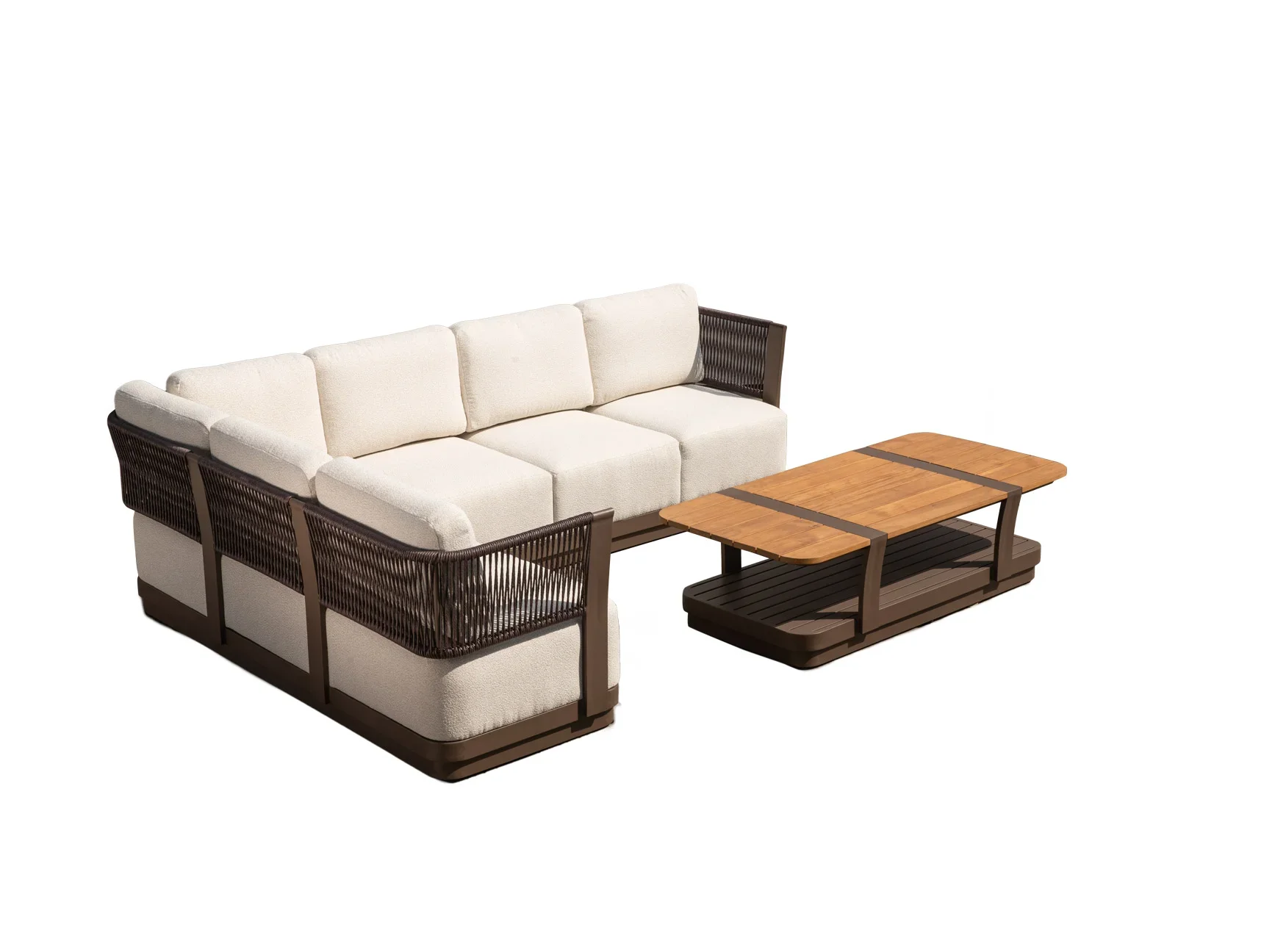
2. Rattan Outdoor Corner Sofa: Natural Look with Relaxed Comfort
Rattan outdoor sofas are typically made from PE synthetic rattan woven over a frame, often aluminum or steel. While natural rattan exists, most outdoor furniture uses synthetic versions due to better weather resistance.
2.1 Aesthetic Appeal
One of rattan’s biggest advantages is its natural, warm, and relaxed appearance. It blends effortlessly into:
-
Garden landscapes
-
Tropical or resort-style patios
-
Poolside lounges
-
Green outdoor environments
The woven texture adds a soft visual character that feels less industrial compared to metal furniture.
2.2 Comfort Experience
Rattan sofas are often paired with thick cushions, which enhances comfort significantly. The woven structure also provides slight flexibility, making the seating feel softer.
For users who prioritize:
-
Relaxation
-
Lounge-style seating
-
Cozy outdoor ambiance
Rattan often feels more inviting.
2.3 Durability and Weather Resistance
Modern PE rattan is designed to resist:
-
UV rays
-
Rain exposure
-
Temperature changes
However, it is not completely maintenance-free. Over time:
-
Prolonged sun exposure may cause fading
-
Moisture can accumulate in cushions if not protected
-
Lower-quality rattan may become brittle
High-quality versions can still last several years outdoors, but they generally require more care than aluminum alternatives.
2.4 Maintenance Requirements
Rattan is relatively easy to maintain:
-
Wipe with damp cloth
-
Vacuum dust from weave gaps
-
Store cushions indoors during rain
But compared to aluminum, it is slightly more demanding in long-term upkeep.
3. Aluminum Outdoor Corner Sofa: Modern Strength and Minimal Maintenance
Aluminum outdoor sofas use powder-coated aluminum frames, often paired with cushions or textile seating surfaces.
This material is widely regarded as one of the most practical choices for outdoor furniture today.
3.1 Modern Design Appeal
Aluminum offers a sleek, clean, and contemporary aesthetic. It fits perfectly into:
-
Minimalist patios
-
Urban balconies
-
Luxury modern gardens
-
Coastal or architectural outdoor spaces
Its clean lines make it especially popular in modern outdoor design trends.
3.2 Strength and Durability
Aluminum is highly valued for its structural performance:
-
Naturally rust-resistant
-
Does not corrode like steel
-
Withstands rain, humidity, and UV exposure
-
Lightweight but strong
In fact, powder-coated aluminum frames are often considered among the most durable outdoor furniture structures available.
This makes aluminum ideal for long-term outdoor use, even in harsh climates.
3.3 Maintenance Advantage
One of aluminum’s biggest advantages is its low maintenance requirement:
-
Simple wipe-down cleaning
-
No rust treatment needed
-
Resistant to environmental wear
Unlike rattan, aluminum does not trap moisture or dust within a woven structure, making it significantly easier to maintain over time.
4. Head-to-Head Comparison: Rattan vs Aluminum
To make the decision easier, let’s compare the two materials across key buying factors.
4.1 Durability
-
Aluminum: Excellent long-term durability; rust-resistant and structurally stable
-
Rattan: Good durability if high-quality synthetic, but more vulnerable to UV and wear over time
Winner: Aluminum
4.2 Weather Resistance
-
Aluminum: Handles rain, sun, humidity, and temperature changes very well
-
Rattan: Weather-resistant but may degrade faster in extreme sun or moisture exposure
Winner: Aluminum
4.3 Maintenance
-
Aluminum: Very low maintenance, easy cleaning
-
Rattan: Requires more frequent care, especially cushion and weave cleaning
Winner: Aluminum
4.4 Comfort
-
Aluminum: Comfort depends heavily on cushions; frame itself is rigid
-
Rattan: Naturally softer feel due to woven structure and cushion integration
Winner: Rattan
4.5 Aesthetic Style
-
Aluminum: Modern, minimalist, architectural
-
Rattan: Natural, cozy, resort-style
Winner: Depends on design preference
4.6 Weight and Mobility
-
Aluminum: Lightweight and easy to move
-
Rattan: Heavier due to combined frame and weave structure
Winner: Aluminum
4.7 Lifespan Value
-
Aluminum: Long-lasting with minimal degradation
-
Rattan: Good lifespan but more dependent on quality and care
Winner: Aluminum
5. Climate Considerations: Which Works Best Where?
Your environment plays a major role in choosing the right material.
Hot and Sunny Climates
Aluminum performs better because:
-
It resists UV damage
-
Does not become brittle
-
Maintains structure over time
Rattan may fade faster under strong sunlight.
Humid or Rainy Regions
Aluminum again has the advantage:
-
No mold or moisture absorption
-
Rust-resistant coating
Rattan can trap moisture in its weave if not properly maintained.
Mild or Covered Outdoor Spaces
Rattan performs well here:
-
Less exposure to harsh elements
-
Maintains aesthetic charm longer
6. Lifestyle-Based Recommendation
Instead of thinking only in terms of materials, consider how you actually use your outdoor space.
Choose Rattan Outdoor Corner Sofa if you:
-
Prefer a natural, relaxed aesthetic
-
Want a resort or tropical vibe
-
Use outdoor space for lounging and entertaining
-
Don’t mind occasional maintenance
Choose Aluminum Outdoor Corner Sofa if you:
-
Want long-term durability with minimal effort
-
Prefer modern and clean design
-
Live in extreme weather conditions
-
Need lightweight and flexible furniture arrangement
7. Cost vs Value Perspective
Rattan sofas often feel more affordable upfront, especially entry-level sets. However:
-
Higher maintenance
-
Potential earlier replacement in harsh climates
Aluminum sofas may cost more initially, but:
-
Longer lifespan
-
Lower maintenance cost
-
Better long-term value
So the real calculation is not just price—but total cost over time.
8. Final Verdict: Which One Should You Choose?
There is no universal winner, but there is a clear logic:
-
If your priority is comfort, natural style, and cozy outdoor atmosphere, rattan is an excellent choice.
-
If your priority is durability, modern design, and low maintenance, aluminum is the stronger investment.
In most long-term outdoor living scenarios, aluminum tends to outperform rattan in practicality and lifespan, while rattan remains unbeatable in visual warmth and lifestyle appeal.
Conclusion
Choosing between a rattan and aluminum outdoor corner sofa ultimately comes down to balancing aesthetics with practicality.
Rattan brings warmth, softness, and a natural lifestyle feel. Aluminum brings strength, durability, and modern simplicity. Both can transform your outdoor space—but they serve slightly different design philosophies.
If you want a space that feels like a vacation retreat, rattan may be your answer. If you want a long-lasting, low-maintenance outdoor living solution that performs in all conditions, aluminum is the smarter long-term choice.
Either way, investing in a high-quality outdoor corner sofa will dramatically enhance how you use and enjoy your outdoor space for years to come.
http://www.cherishoutdoor.com
cherishoutdoor -
-
AuthorPosts

- You must be logged in to reply to this topic.